WASHINGTON, DC (March 1, 2026) — The U.S. Department of Agriculture’s Food Safety and Inspection Service (FSIS) has announced a public health alert for ready-to-eat beef jerky products produced by Punahele Jerky Company, Inc. due to misbranding and an undeclared soy allergen. According to FSIS, the products may contain soy lecithin that is not listed on the label, posing a risk to consumers with soy allergies. Regulators said a recall was not requested because the affected items are no longer available for purchase.
Punahele Jerky Company recall: quick summary
FSIS issued a public health alert for several beef jerky products with best-by dates on or before February 17, 2027. The issue involves the discovery of undeclared soy lecithin during a routine label review. No illnesses or adverse reactions have been confirmed. Consumers who still have the products at home should not eat them and should discard them or return them to the place of purchase.
Official recall details
✦
Alert date: March 1, 2026
✦
✦
Company: Punahele Jerky Company, Inc.
✦
Product: Ready-to-eat beef jerky (Beef Crisps varieties)
✦
Issue: Misbranding; undeclared soy allergen (soy lecithin)
✦
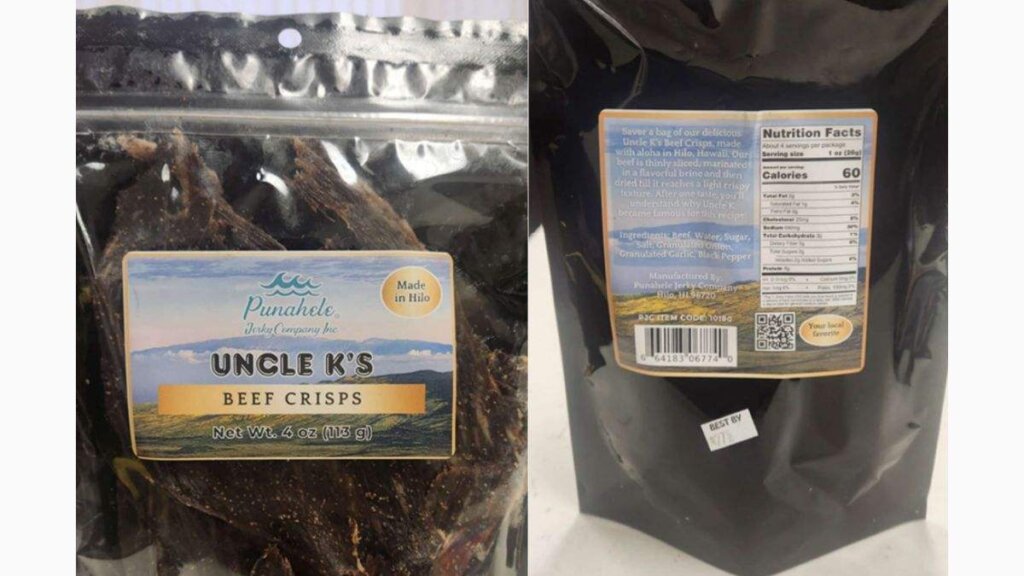
Product details: 6-oz and 4-oz plastic packages; best by February 17, 2027, or earlier; establishment number “EST. 2625”
✦
Consumer action: Do not consume; throw away or return to the place of purchase
✦
Want to know more about what happened? Keep reading.
What happened?
FSIS said Punahele Jerky Company initiated corrective actions after the agency discovered the labeling issue during a routine FSIS label review. The public health alert was announced on March 1, 2026, in coordination with FSIS.
In its alert, the agency warned that “the products may contain soy lecithin, a known allergen, which is not declared on the product label.” FSIS added that “anyone concerned about a reaction should contact a health care provider.”
The affected products include multiple flavors of beef crisps sold in 4-oz and 6-oz plastic packages with best-by dates of February 17, 2027, or earlier. The company distributed the items to retail stores in Hawaii and sold them nationwide through online orders.
Affected products
Brand | Product | Size | Best by date | Issue | Affected zones |
|---|---|---|---|---|---|
Punahele Jerky Company | Dried Hawaiian Style Beef Crisps, Original Salt & Pepper | 6 oz | Feb. 17, 2027 or earlier | Undeclared soy | Hawaii, nationwide online |
Punahele Jerky Company | Uncle K’s Beef Crisps | 4 oz | Feb. 17, 2027 or earlier | Undeclared soy | Hawaii, nationwide online |
Punahele Jerky Company | Kilauea Fire Spicy Beef Crisps | 4 oz | Feb. 17, 2027 or earlier | Undeclared soy | Hawaii, nationwide online |
What caused the issue?
According to the FSIS notice, the problem stemmed from misbranding during labeling, which failed to disclose soy lecithin as an ingredient. The agency confirmed that soy is a major allergen that can trigger serious reactions in sensitive individuals.
Health risks include hives, swelling, gastrointestinal distress, and, in severe cases, anaphylaxis. People with soy allergies face the highest risk. Company officials said no confirmed adverse reactions have been reported so far.
Questions you might have
The alert covers several ready-to-eat beef jerky products made by Punahele Jerky Company, including Original Salt & Pepper, Uncle K’s Beef Crisps, and Kilauea Fire Spicy Beef Crisps.
They may contain soy lecithin, a known allergen, that is not declared on the product label, which makes the products misbranded.
People with soy allergies or severe sensitivities face the highest risk of an allergic reaction.
If you have a soy allergy and experience symptoms such as hives, swelling, or difficulty breathing, seek medical attention immediately.
Check for 4-oz or 6-oz packages with the establishment number EST. 2625 and best-by dates on or before February 17, 2027.
The company distributed them to retail stores in Hawaii and sold them nationwide through online orders.
FSIS has confirmed that no adverse reactions or illnesses have been reported so far.
Symptoms may include itching, hives, swelling of the face or throat, nausea, vomiting, abdominal pain, or difficulty breathing.
Do not consume it. Throw it away or return it to the place of purchase.
Consumers can contact the company’s Food Safety and QA Compliance Officer at 808-961-0877 or call the USDA Meat and Poultry Hotline at 888-674-6854.
Here’s what you should do


- Do not consume the product; throw it away or return it to the store.
- Check the label for EST. 2625 and the best-by date.
- Identify the flavor and package size listed in the alert.
- Contact Punahele Jerky Company’s Food Safety and QA Compliance Officer at 808-961-0877 with questions.
Behind the brand
Punahele Jerky Company, Inc., based in Hilo, Hawaii, produces shelf-stable beef jerky products distributed locally and through online sales. The company’s public health alert states it has stopped distribution of the affected products and is working with FSIS to address labeling controls.
Source86 reached out to Punahele Jerky Company for comment on how the mislabeling occurred, but has not yet received a response.
Other relevant recalls
Recent allergen-related alerts have affected jerky and snack products across the U.S., highlighting ongoing challenges with label verification and allergen controls. Recent cases include Ukrop’s, which recalled decorated pound cakes over an undeclared soy allergen; Suzanna’s Kitchen, which pulled fully cooked breaded chicken products due to undeclared soy; and White Castle, which recalled its Original Sliders over undeclared milk and soy.
Additional recalls involved Jeni’s, which recalled Passion Fruit Dreamsicle ice cream bars after discovering undeclared wheat and soy allergens. Together, these incidents underscore a broader pattern of allergen mislabeling across diverse food categories, from baked goods and frozen meals to restaurant items and desserts.
“Undeclared allergens are the number one reason for food recalls in the United States, and accurate food labels are essential to help people with food allergies stay safe,” said Food Allergy Research & Education (FARE), a leading U.S. allergy advocacy organization.
Eran Mizrahi, CEO of Source86, said the alert reflects a broader industry issue:
“Food safety isn’t just about compliance; it’s about trust. Every incident reinforces the need for transparency, rigorous checks, and supplier accountability.”
Regulatory context
This alert follows a wider pattern of undeclared allergen incidents involving ready-to-eat foods sold both in stores and online. Over the past year, several meat and snack producers have issued similar alerts for soy and wheat mislabeling, underscoring the importance of strict label review and batch verification systems.
Ensuring safe eats
This public health alert highlights how critical accurate labeling is for consumer safety. Companies must strengthen allergen verification and packaging controls, while consumers should regularly check pantry items against recall and alert notices.
At Source86, we help food brands manage ingredient sourcing, FSQA oversight, and private label production with transparency and precision, ensuring supply chains can respond quickly when safety issues arise. Contact us.