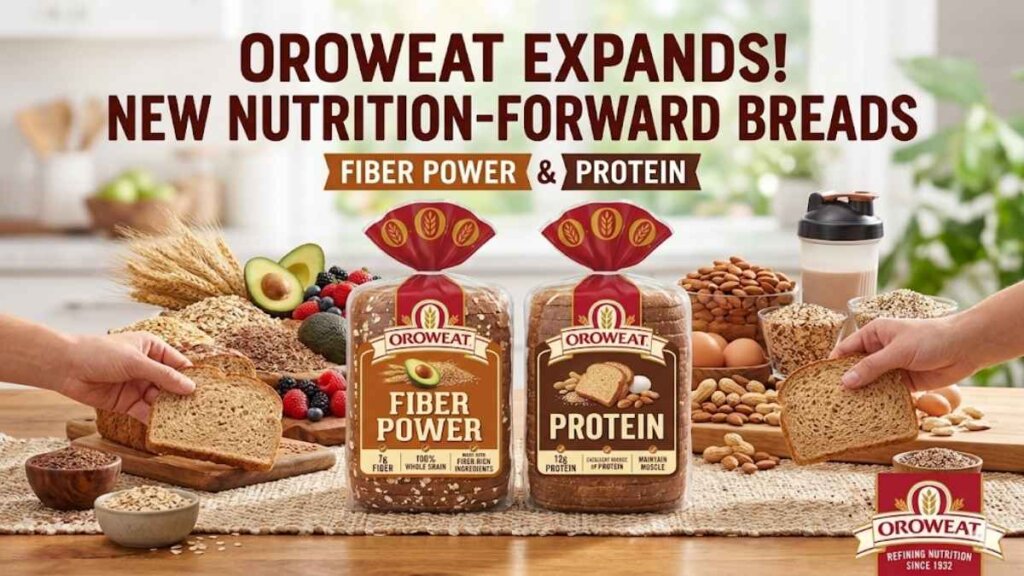
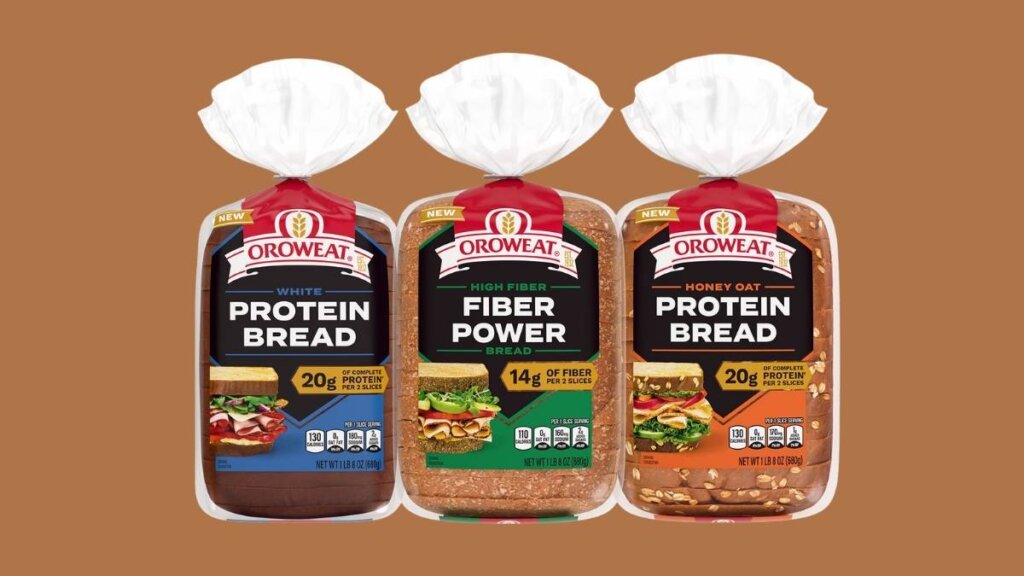
Bimbo Bakeries USA announced on May 6, 2026 the nationwide launch of three new Oroweat premium breads targeting the functional nutrition bread segment: Oroweat Fiber Power Bread (14g fiber per two slices) and two Oroweat Protein Breads (20g complete protein per two slices) in Protein White Bread and Protein Honey Oat Bread varieties. All three are available now at grocery retailers nationwide at a suggested retail price of $7.69. Orela Suku DeCurtis, Director of Marketing for Oroweat, is the spokesperson. The announcement is issued by Bimbo Bakeries USA, headquartered in Irving, Texas, the U.S. division of Grupo Bimbo, S.A.B. de C.V., the world’s largest baking company operating in 39 countries with more than 20,000 U.S. associates and more than 50 U.S. manufacturing locations.
The Three Products: Ingredient Architecture Across Two Functional Tracks
Oroweat Fiber Power Bread (14g fiber per two slices) is the fiber track entry. The announcement describes it as a “first-of-its-kind blend of plant-based fiber and protein” delivering 14g of fiber per two-slice serving, which puts a two-slice sandwich at 40% of the daily recommended fiber intake based on a 2,000-calorie diet. At 14g fiber per two slices, this is among the highest fiber-per-serving claims in the packaged sliced bread category at national retail scale. Standard whole wheat bread delivers 4 to 6g of fiber per two slices. Oroweat’s existing Double Fiber bread delivers 6g. At 14g, Fiber Power Bread requires a fiber enrichment system well above what whole grain wheat flour alone can deliver.
The “plant-based fiber” descriptor points to added fiber ingredients beyond the native fiber in the wheat flour base. The most common commercial options for high-fiber bread enrichment are chicory root inulin (fructooligosaccharides), psyllium husk, oat fiber, wheat bran, pea fiber, or resistant starch systems. At 14g per two slices, Oroweat is almost certainly using a concentrated fiber ingredient rather than relying on grain-based fiber alone. For fiber ingredient suppliers serving the commercial bakery segment, this is the most aggressive fiber claim in a mainstream sliced bread product at Bimbo Bakeries USA’s national distribution scale.
Oroweat Protein White Bread (20g complete protein per two slices) is the protein track’s first variant. “Complete protein” is the most significant claim in the announcement. A complete protein contains all nine essential amino acids in adequate proportions. Most plant protein sources used in bread enrichment, including wheat gluten and pea protein, are not independently complete proteins. Achieving a complete protein claim in a sliced bread typically requires either the inclusion of a complete protein source (such as egg white, dairy whey protein, or soy protein isolate, which are individually complete) or a complementary combination of plant proteins that together provide all nine essential amino acids. The “plant-based” descriptor in the announcement suggests a plant protein system rather than an animal protein, which makes the complete protein claim more formulation-intensive. For protein ingredient suppliers, the complete protein claim at 20g per two slices in a white bread format is the most demanding protein specification in the functional bread category.
Oroweat Protein Honey Oat Bread (20g complete protein per two slices) is the protein track’s second variant, featuring a crunchy oat topping and a honey sweetness finish alongside the same 20g complete protein claim. The oat topping requires rolled oat or oat flake inputs at the topping adhesion specification for a sliced bread baking process. The honey flavor requires either real honey or a natural honey flavor compound at the sweetness intensity required for a “sweet finish” descriptor without exceeding the sugar content typical of a nutrition-forward bread. The oat topping visual is also a consumer signaling element: it positions the bread visually within the premium grain and seed topping bread category.
The “First-of-Its-Kind” Blend Claim
The announcement describes both Fiber Power and Protein Breads as featuring a “first-of-its-kind blend of plant-based fiber and protein.” This is a dual-function claim: the breads are not just fiber-fortified or protein-fortified independently. They appear to use a unified ingredient system that delivers both functional benefits simultaneously. That is a meaningfully different formulation approach from adding a fiber ingredient to a standard bread base or adding a protein ingredient to a standard bread base separately.
A dual plant-based fiber and protein blend at commercial bakery scale suggests the use of a multi-functional ingredient system such as a pea fiber and pea protein concentrate combination, a chickpea flour blend that contributes both fiber and protein, a high-fiber legume flour that provides both macronutrients, or a proprietary blend from a functional ingredient manufacturer that has optimized both fiber and protein delivery in a bread matrix. The critical formulation challenge with either a high-fiber or high-protein bread is maintaining the loaf structure, crumb softness, slice integrity, and shelf life that consumers expect from a premium sliced bread. Adding concentrated fiber or protein above certain thresholds affects the gluten network, water absorption, and Maillard browning behavior of the dough, requiring careful calibration of the enrichment level against the base wheat flour and dough conditioner systems.
The Consumer Data Context: Fiber Gap and Protein Demand
The announcement cites two specific consumer data points. A 2025 Cleveland Clinic report and a 2016 National Library of Medicine report together confirm that over 90% of U.S. adults do not get enough fiber in their diets. A 2026 International Food Information Council report confirms that 70% of U.S. adults are looking for ways to add protein to their diets.
The 90% fiber gap statistic is the more commercially significant of the two for the bread category. Fiber deficiency is both more widespread and more actionable through the bread vehicle than protein deficiency, because bread is already a daily consumption habit for most Americans. Adding 14g of fiber to a food that millions of consumers eat every day at breakfast and lunch is a more efficient path to addressing the fiber gap than any supplement or functional food that requires a new consumption behavior. Oroweat’s Fiber Power Bread positions itself explicitly within this logic: a two-slice sandwich gets you to 40% of your daily fiber goal without changing what you eat, just upgrading what your bread delivers.
The 70% protein demand figure mirrors PepsiCo’s own January 2026 survey data that drove the Quaker Protein Rice Crisps launch. It is one of the most consistent consumer research findings across multiple independent studies in 2025 and 2026. Oroweat’s two Protein Bread variants bring the protein demand response into the commercial bread category, which has historically been slower than snacks, beverages, and yogurt to adopt protein fortification at mainstream scale.
The Bimbo Bakeries USA Scale Context
This is the second major Bimbo Bakeries USA announcement we have covered in the same week, following the Artesano Potato Hot Dog Buns, Potato Hamburger Buns, and Sourdough Bakery Bread launch on April 27. That Artesano launch was a summer grilling occasion play. The Oroweat Fiber Power and Protein Bread launch is a functional nutrition play. Two different brand positioning stories, two different ingredient tracks, both issuing from the same parent company in the same week, confirms that Bimbo Bakeries USA is executing a simultaneous multi-brand, multi-occasion product expansion strategy in spring 2026.
Oroweat is one of Bimbo Bakeries USA’s most premium bread brands, positioned above the standard sliced bread tier and competing directly with Dave’s Killer Bread (also covered this week) in the premium, nutrition-forward sliced bread category. Where Dave’s Killer Bread’s differentiator is organic certification and whole grain density, Oroweat’s differentiator is nutritional fortification and the functional claim architecture. Both are competing for the same premium bread consumer who is willing to pay $7-plus per loaf for a bread that delivers something beyond basic carbohydrates.
At $7.69 SRP, the Oroweat Fiber Power and Protein Breads are priced within the premium functional bread tier but below the Dave’s Killer Bread price point for equivalent loaf sizes, positioning them for mainstream grocery shelf placement rather than exclusively natural and specialty channel distribution.
Why It Matters for Fiber Ingredient, Plant Protein, Oat, and Honey Ingredient Suppliers
Oroweat Fiber Power Bread’s 14g fiber per two-slice specification at Bimbo Bakeries USA’s national commercial bakery production and distribution scale creates the highest fiber-per-serving demand event in the mainstream sliced bread category to date, requiring a concentrated plant-based fiber ingredient system at the water absorption, texture compatibility, and dough rheology specification required to maintain standard sliced bread crumb structure and shelf life at 14g fiber per serving without compromising the slice integrity, softness, and consumer palatability that define the Oroweat premium bread standard. For chicory inulin, pea fiber, oat fiber, psyllium husk, and resistant starch suppliers serving commercial bakery functional ingredient programs, Oroweat Fiber Power Bread at Bimbo Bakeries USA’s 50-plus U.S. manufacturing facility scale is the largest single mainstream bread brand entry into the high-fiber fortification space and a new sustained high-volume procurement program for concentrated fiber ingredients at commercial bakery specification.
Oroweat Protein White Bread and Protein Honey Oat Bread’s 20g complete protein per two-slice specification at national retail distribution requires a plant-based complete protein system or complementary plant protein combination delivering all nine essential amino acids at the concentration and amino acid profile required for a “complete protein” claim in a sliced bread formulation, compatible with a white bread crumb structure for the Protein White Bread and an oat-topped loaf format for the Protein Honey Oat Bread at commercial bakery production conditions. For pea protein isolate, soy protein isolate, faba bean protein, chickpea flour, and functional protein blend suppliers serving commercial bakery ingredient programs, the Oroweat Protein Bread two-SKU launch at $7.69 SRP at Bimbo Bakeries USA’s national distribution is a new high-volume, high-specification protein ingredient application in the mainstream sliced bread category that sits alongside the existing protein fortification programs in snacks, beverages, and yogurt as a sustained demand channel.
The Protein Honey Oat Bread’s oat topping and honey flavor requirements create concurrent demand for food-grade rolled oat or oat flake inputs at the topping adhesion and visual specification for a commercial sliced bread baking process, alongside natural honey or honey flavor compound inputs at the sweetness intensity specification for a nutrition-forward bread with a premium sweet finish at Bimbo Bakeries USA’s production scale. For rolled oat suppliers and natural honey ingredient manufacturers serving commercial bakery accounts, the Protein Honey Oat Bread creates a new sustained demand program for both oat topping and honey flavor inputs within Bimbo Bakeries USA’s premium Oroweat bread production program at national retail distribution volume.
Other News
While Bimbo Bakeries USA is aggressively scaling its functional footprint with Oroweat’s high-protein and high-fiber formulations, the competition across the packaged bread category is reaching a fever pitch. Other commercial baking giants are taking a different tactical approach to capturing health-conscious shoppers, choosing to focus on extreme ingredient simplicity paired with massive pop-culture marketing power. Discover how a chief rival is overhauling its core lineup and leveraging a global superstar to educate consumers in our coverage of the Nature’s Own Simpler Recipe & John Cena “Breaducator” Campaign.
FAQs
What are the three new Oroweat products? Oroweat Fiber Power Bread (14g fiber per two slices), Oroweat Protein White Bread (20g complete protein per two slices), and Oroweat Protein Honey Oat Bread (20g complete protein per two slices). All available now at grocery retailers nationwide at $7.69 SRP.
What makes the fiber and protein claims significant? 14g fiber per two slices is among the highest fiber-per-serving claims in mainstream sliced bread at national retail. 20g complete protein per two slices delivers all nine essential amino acids, a more demanding specification than a partial protein claim, in a sliced bread format. Oroweat describes both as featuring a “first-of-its-kind blend of plant-based fiber and protein.”
What does the consumer data show? Over 90% of U.S. adults do not get enough fiber in their diets (Cleveland Clinic, 2025). 70% of U.S. adults are looking for ways to add protein to their diet (IFIC, 2026).
Who is Oroweat? A premium bread brand under Bimbo Bakeries USA, the U.S. division of Grupo Bimbo, the world’s largest baking company operating in 39 countries. Bimbo Bakeries USA has more than 20,000 U.S. associates and more than 50 U.S. manufacturing locations.
Where to find the products? At grocery retailers nationwide and at oroweat.com for a store locator.
About Source86
Oroweat’s Fiber Power and Protein Bread launch reflects active demand for concentrated plant-based fiber ingredients including chicory inulin, pea fiber, oat fiber, psyllium husk, and resistant starch at the water absorption and dough compatibility specification required for 14g fiber per two-slice sliced bread production at Bimbo Bakeries USA’s commercial bakery scale, plant-based complete protein systems or complementary plant protein blends delivering all nine essential amino acids at 20g per two slices in a sliced bread formulation compatible with white bread and oat-topped loaf formats, rolled oat and oat flake inputs at the topping adhesion specification for a commercial sliced bread baking process, natural honey or honey flavor compound inputs for a sweet-finish premium bread formulation, enriched wheat flour at the protein content and gluten quality specification supporting both high-fiber and high-protein bread dough systems at commercial bakery production, and dough conditioner and bread improver systems capable of managing the rheological impact of concentrated fiber and protein enrichment on commercial bread dough at Bimbo Bakeries USA’s 50-plus U.S. manufacturing facility production standard. At Source86, we connect functional bread manufacturers, premium CPG bakery brands, and commercial baking ingredient buyers with trusted bulk and wholesale sourcing partners for plant-based fiber concentrates, complete protein systems for commercial bakery applications, oat ingredients, natural honey and sweetener inputs, enriched wheat flour, and the ingredient sourcing infrastructure that supports high-fiber and high-protein bread production at national retail distribution scale under the world’s largest baking company’s U.S. operations.
Whether your production team sources concentrated fiber ingredients for a high-fiber commercial bread program, plant-based complete protein blends for a 20g protein sliced bread formulation, or rolled oats for a premium bread topping application, Source86 is your bridge to the right manufacturing and supply chain partners. Contact Source86 today to start your sourcing search.