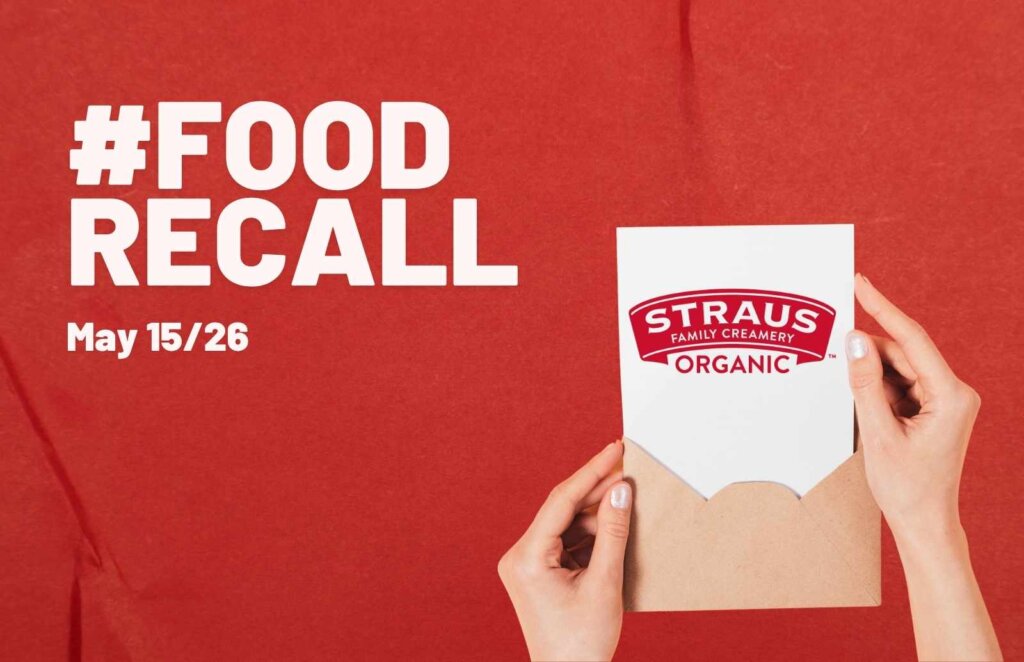
PETALUMA, CA (May 15, 2026) — The U.S. Food and Drug Administration (FDA) has announced a voluntary recall issued by Straus Family Creamery of Petaluma, California, covering select production runs of its Organic Super Premium Ice Cream across five flavors and seven SKUs due to the potential presence of metal foreign material. According to the FDA, only production runs identified by specific best-by dates are affected. All recalled best-by dates fall in late December 2026. The products were distributed to retailers in 17 states beginning May 4, 2026. No injuries have been reported. Consumers should discard the product rather than return it to the store, and can visit strausfamilycreamery.com/recall/ to request a voucher for a replacement product.
Straus Family Creamery recall: Quick summary
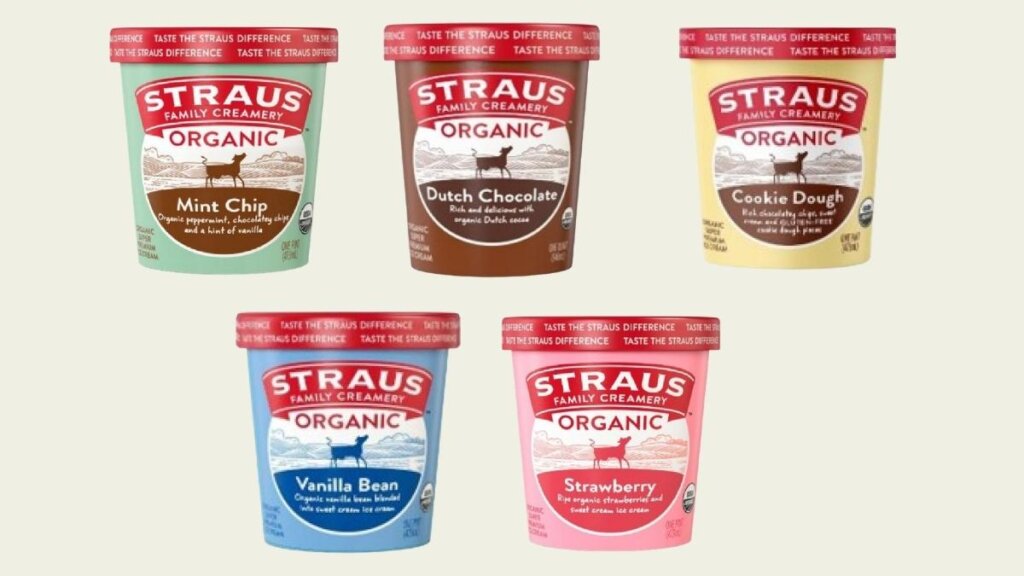
Straus Family Creamery announced a voluntary recall on May 14, 2026, covering select production runs of five Organic Super Premium Ice Cream flavors across seven SKUs in pint and quart sizes. The potential presence of metal fragments was identified in specific production runs only. Affected best-by dates range from December 23 to December 30, 2026. Products were distributed to Arizona, California, Colorado, Connecticut, Florida, Georgia, Iowa, Illinois, Indiana, Maryland, New Jersey, Oregon, Pennsylvania, South Carolina, Texas, Washington, and Wisconsin, and hit retail shelves beginning May 4, 2026. Consumers should not return the product to the store. Instead, they should discard it and visit strausfamilycreamery.com/recall/ to receive a voucher for a free replacement at their local retailer.
- Straus Family Creamery recall: Quick summary
- Official Recall Details
- What happened?
- What caused the issue?
- Metal foreign material in food production
- Why metal fragments in food are a serious health risk
- Why consumers should discard rather than return
- Questions you might have
- Here’s what you should do
- Behind the brand
- Ensuring safe eats
Official Recall Details
✦
Date recall was issued: May 14, 2026 (FDA publish date: May 15, 2026)
✦
Announced by: U.S. Food and Drug Administration (FDA)
✦
Company name: Straus Family Creamery, Petaluma, California
✦
Brand name: Straus Family Creamery
✦
✦
Type of issue: Potential presence of metal foreign material
✦
Product details: Paper cup with seal and lid, available in pint and quart sizes. Best-by date printed in black on the outside bottom of the container.
✦
Distribution area: Arizona, California, Colorado, Connecticut, Florida, Georgia, Iowa, Illinois, Indiana, Maryland, New Jersey, Oregon, Pennsylvania, South Carolina, Texas, Washington, and Wisconsin
✦
What consumers should do: Do not eat the product. Discard it. Visit strausfamilycreamery.com/recall/ to request a free replacement voucher.
What happened?
The FDA said Straus Family Creamery initiated the voluntary recall on May 14, 2026, covering a small number of production runs of select Organic Super Premium Ice Cream flavors due to the potential presence of metal foreign material in the affected lots.
The recall covers only the specific production runs identified by the best-by dates listed below. Straus Family Creamery confirmed it is working with retailers in all 17 affected states to remove the potentially affected products from shelves. The company stated it has implemented appropriate corrective actions. No injuries have been reported to date.
The timing of this recall is notable. In April 2026, Straus Family Creamery announced the nationwide expansion of its Organic Super Premium Ice Cream line to Whole Foods Market stores across the country for the first time, building on its existing presence in West Coast and Midwest Whole Foods locations and introducing the brand to East Coast shoppers. The recalled production runs were on shelves as of May 4, 2026, just weeks into that expanded distribution.
Affected products
Flavor | Size | Best-by date | UPC |
|---|---|---|---|
Vanilla Bean | Pint | 23-Dec-2026 | 7-84830-10030-6 |
Vanilla Bean | Pint | 28-Dec-2026 | 7-84830-10030-6 |
Strawberry | Quart | 24-Dec-2026 | 7-84830-10097-9 |
Strawberry | Pint | 25-Dec-2026 | 7-84830-10095-5 |
Cookie Dough | Pint | 26-Dec-2026 | 7-84830-10104-4 |
Dutch Chocolate | Quart | 27-Dec-2026 | 7-84830-10012-2 |
Mint Chip | Pint | 30-Dec-2026 | 7-84830-10050-4 |
What caused the issue?
Metal foreign material in food production
The recall notice does not specify the exact source of the potential metal contamination within Straus Family Creamery’s production process. Metal foreign material in food manufacturing most commonly originates from equipment wear, including blades, scrapers, screens, and mixing components that can shed small fragments during production. Food manufacturers are required under FSMA (the Food Safety Modernization Act) to implement preventive controls that address foreign material hazards, including metal detection or x-ray inspection systems at critical points in the production line.
The fact that Straus Family Creamery identified the issue and recalled only specific production runs identified by best-by dates suggests the company’s internal monitoring systems were able to pinpoint the affected lots. The recall covers a stated “small number of production runs,” indicating the issue was isolated rather than systemic across the product line.
Why metal fragments in food are a serious health risk
Metal fragments in food present a physical injury hazard. Depending on the size, shape, and hardness of the fragment, consumption can cause lacerations to the mouth, throat, or digestive tract, broken teeth, internal bleeding, or in severe cases, intestinal perforation requiring emergency surgery. Children, elderly adults, and individuals with existing gastrointestinal conditions face elevated risk from physical food hazards. Even small fragments not immediately perceptible while eating can cause internal injury.
The FDA classifies foreign material contamination as a Class II recall hazard when the probability of causing adverse health consequences is remote but not impossible, and as a Class I hazard when the risk is more direct. The absence of reported injuries does not eliminate the hazard for product that may still be in consumers’ homes or freezers.
Why consumers should discard rather than return
Straus Family Creamery’s instructions are specific and worth noting: consumers should not return the recalled product to the store. Instead, they should discard it and visit strausfamilycreamery.com/recall/ to request a voucher for a free replacement product at their local retailer. This approach is designed to streamline the replacement process without requiring consumers to transport a potentially contaminated product back through retail channels.
Questions you might have
- How do I find the best-by date on my product? The best-by date is printed in black ink on the outside bottom of the paper cup container. Check the bottom of your pint or quart for a date between December 23 and December 30, 2026. If your product carries one of those dates and matches the flavor and UPC listed above, do not consume it.
- Where was this product sold? The recalled products were distributed to retailers in 17 states: Arizona, California, Colorado, Connecticut, Florida, Georgia, Iowa, Illinois, Indiana, Maryland, New Jersey, Oregon, Pennsylvania, South Carolina, Texas, Washington, and Wisconsin. The products were on retail shelves beginning May 4, 2026.
- Should I return the product to the store? No. Straus Family Creamery specifically asks consumers not to return the product to the store. Instead, discard the product safely and visit strausfamilycreamery.com/recall/ to request a voucher for a free replacement product at your local retailer.
- What is the health risk from metal fragments in ice cream? Metal fragments in food can cause lacerations to the mouth, throat, or digestive tract, broken teeth, and in more serious cases, internal injury. The risk depends on the size and shape of any fragment present. Because metal fragments are not always visible or detectable while eating, discarding the product is the only way to eliminate the risk. If you consumed the recalled product and experience any mouth, throat, or abdominal pain, seek medical attention promptly.
- Were any injuries reported? No. As of the recall announcement on May 14, 2026, Straus Family Creamery confirmed no injuries had been reported in connection with the recalled products.
- Are other Straus Family Creamery products affected? No. The recall is limited to the five ice cream flavors and seven SKUs with the specific best-by dates listed above. All other Straus Family Creamery products, including other ice cream flavors, pints and quarts with different best-by dates, and other dairy products such as milk, yogurt, butter, and cream, are not included in this recall.
- What corrective actions is Straus taking? Straus Family Creamery stated in its recall notice that appropriate corrective actions have been implemented. The company did not specify the nature of those actions but confirmed it is working with retailers to remove affected products from shelves across all 17 states.
- How do I request a replacement voucher? Visit strausfamilycreamery.com/recall/ and follow the instructions to request a voucher. The voucher can be redeemed at your local retailer for a free replacement Straus Family Creamery product.
- Is this a voluntary recall or was it ordered by the FDA? This is a voluntary recall initiated by Straus Family Creamery, conducted with the knowledge of the U.S. Food and Drug Administration.
Here’s what you should do
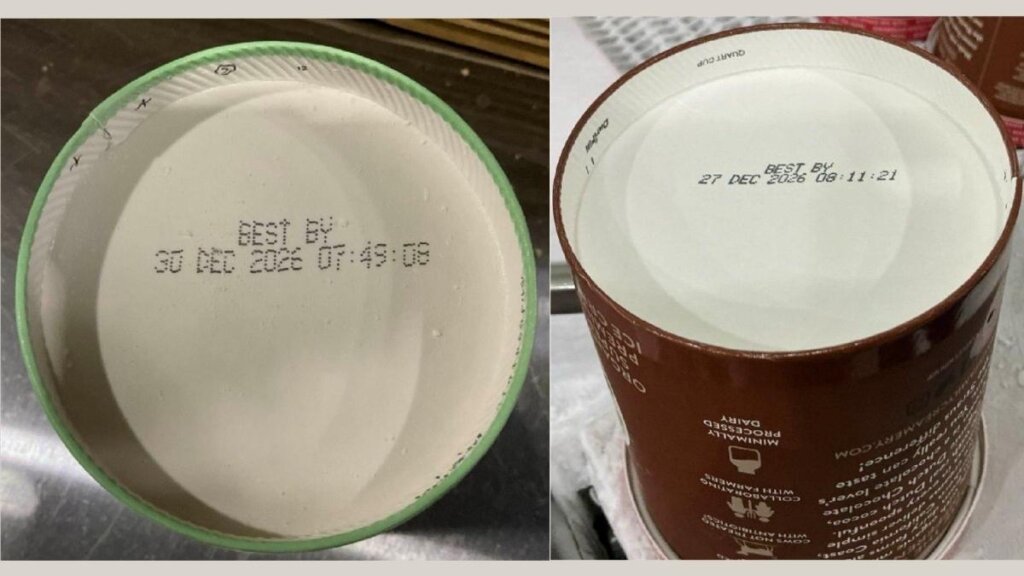
- What to do with the product: Do not eat it. Discard it safely. Do not return it to the store.
- How to identify the affected product: Check the bottom of your Straus Family Creamery ice cream container for a best-by date between December 23 and December 30, 2026. Match the flavor and UPC against the affected products table above.
- How to get a replacement: Visit strausfamilycreamery.com/recall/ to request a free replacement voucher for use at your local retailer.
- Brand contact details: Straus Family Creamery: 1-707-776-2887, Monday through Friday, 9:30 a.m. to 5:00 p.m. Pacific Time. Email: [email protected]. Media: Postcard Communications, Olga Katsnelson, [email protected].
Behind the brand
Straus Family Creamery was founded in 1994 by Albert Straus, the oldest son of Bill and Ellen Straus, who converted his family’s dairy farm to organic and created the first 100% certified organic creamery in the United States. The Straus Dairy Farm itself has roots going back to 1941, when Bill and Ellen Straus established the original farm in Marshall, California, in the small coastal community along Tomales Bay in Marin County.
Albert Straus returned to the family farm in the late 1970s after completing his degree in Dairy Sciences at California Polytechnic State University, San Luis Obispo. Facing the economic pressures that were driving small family dairies out of business across California, he made the decision to convert the operation to fully organic production. In 1994, the Straus Dairy Farm became the first certified organic dairy west of the Mississippi River, and Straus Family Creamery opened as the first 100% certified organic creamery in the country.
Today the company supplies milk, cream, yogurt, butter, and ice cream to retailers across the western United States and beyond, sourcing milk exclusively from a network of 12 organic family farms in Marin and Sonoma Counties. The company has achieved TRUE Zero Waste Certification for its manufacturing processes and has pursued carbon-neutral farming goals as part of a broader environmental mission. In September 2025, the Organic Trade Association honored Albert Straus with its Organic Lifetime Achievement Award.
Beginning April 2026, Straus Family Creamery’s super-premium organic ice cream pints and quarts became available for the first time at Whole Foods Market stores nationwide, marking the brand’s most significant retail expansion in its 30-year history and introducing Straus ice cream to East Coast consumers for the first time.
Source86 reached out to Straus Family Creamery for additional comment on the source of the metal contamination and the corrective measures being implemented, but had not received a response beyond the company’s published recall notice at the time of publication.
Other relevant recalls
Foreign material recalls in premium and organic food brands have appeared alongside the more common allergen and pathogen-driven events in the food industry. In 2025, Whole Foods Market recalled its private label granola after a metal fragment was identified in a production run, and a major organic snack manufacturer recalled flavored nuts after a customer found a metal shard in a bag. These cases share a common thread with the Straus recall: equipment-related foreign material events in food production are not confined to commodity or budget-tier manufacturers. They occur across every segment of the industry when mechanical wear or equipment failure goes undetected before product ships.
Beyond foreign material, the broader recall landscape this week covered multiple food safety failure modes. The Fly By Jing Creamy Sesame Noodles recall announced May 12, 2026, involved peanut cross-contact at a third-party manufacturer, a production environment failure distinct from the Straus equipment issue but rooted in the same challenge of controlling hazards within the physical production space. The HH Fresh Trading enoki mushroom recall announced May 13, 2026, involved confirmed Listeria contamination in fresh produce, a pathogen-driven event with a different risk profile but similarly requiring immediate consumer action. And the Spring and Mulberry chocolate bar recall expansion earlier this week traced a potential Salmonella risk to a single lot of date ingredient, demonstrating how a contamination event in a single upstream ingredient can cascade across an entire product line.
A food manufacturing equipment specialist noted the particular challenge that frozen dairy production presents for foreign material control:
“Ice cream production involves scraped surface heat exchangers, high-speed mixing equipment, and continuous freezers, all of which have mechanical components subject to wear. Metal detection after filling is standard practice, but very small fragments in a dense frozen matrix can challenge even well-calibrated detection systems. Finding this after distribution rather than at the production stage raises questions about where the detection gap occurred.”
A food safety consultant added:
“A voluntary recall on a small number of production runs, with corrective actions already implemented, is actually a sign that the company’s monitoring program is working. The question is always whether the detection happened before or after shipment, and in this case it happened after.”
Eran Mizrahi, CEO of Source86, said the Straus recall is a reminder that physical food safety hazards require the same rigorous controls as allergen and pathogen risks:
“Food safety isn’t just about compliance; it’s about trust. Every recall reminds us how vital it is to maintain transparency, rigorous checks, and supplier accountability. Metal fragment controls are not secondary to allergen or pathogen programs. They are an equally critical part of any comprehensive food safety plan.”
Ensuring safe eats
The Straus Family Creamery recall is a timely reminder that foreign material hazards can reach consumers from any food manufacturer, including premium and organic brands with strong reputations for quality. For shoppers who purchased Straus ice cream at Whole Foods, a regional natural foods retailer, or a specialty grocer in any of the 17 affected states since May 4, 2026, checking the bottom of the container takes less than ten seconds.
Check the bottom of your Straus Family Creamery ice cream container now. If the best-by date falls between December 23 and December 30, 2026, and the flavor matches one of the seven SKUs listed above, do not eat it. Discard it and visit strausfamilycreamery.com/recall/ for your free replacement voucher. Contact Straus Family Creamery at 1-707-776-2887 or [email protected] with any questions.
At Source86, we help food brands manage ingredient sourcing, FSQA oversight, and private label production with transparency and precision, ensuring that when recalls happen, supply chains are prepared to respond quickly. Our team works directly with manufacturers to implement the equipment inspection programs, metal detection protocols, and production verification systems that catch foreign material hazards before they reach consumers. Reach out to learn how Source86 can support your brand’s food safety program.