- Recall Date: May 22, 2025
- Announced By: FDA on May 23, 2025
- Company Name: Albertsons Companies
- Brand Names: ReadyMeals & Star Market
- Product Affected: Greek Salad deli items
- Contamination Risk: Possible Salmonella infection
- Products Affected: Three store-made deli Greek salads
- What to Do: Do not consume; return or discard the product
Shall we learn more about this?
What Happened?
On May 22, 2025, Albertsons Companies voluntarily recalled three varieties of store-made Greek salad deli items due to the potential for Salmonella contamination. This action followed a broader recall by Fresh Creative Foods, a division of Reser’s Fine Foods, Inc., which supplied cucumbers used in the affected products. The cucumbers in question were grown by Bedner Growers, Inc. in Boynton Beach, Florida. The recall is linked to an active illness outbreak.
These deli salads were sold across popular banners such as ACME, Shaw’s, Safeway, Kings Food Markets, and Star Market, distributed in 13 states and Washington, D.C.
Product Details
Brand | Product Name | Size | UPC | Sell Thru Dates | States Distributed | Issue |
Salad Greek Authentic FS | LBS | 29307000000–00901 | May 23–24, 2025 | CT, DE, DC, MD, NJ, NY, PA, VA | Salmonella | |
Star Market | ReadyMeals Salad Greek SS | LBS | 29248300000 | May 20–24, 2025 | MA, ME, NH, RI, VT | Salmonella |
Star Market | Salad Greek FS | LBS | 29232900000 | May 20–24, 2025 | MA, ME, NH, RI, VT | Salmonella |
What Caused the Issue?
The root of this recall lies in a contaminated batch of cucumbers supplied by Bedner Growers, Inc. These cucumbers were included in the Greek salads distributed under Albertsons’ store banners and were found to be contaminated with Salmonella, a common bacterial pathogen known to cause foodborne illness.
Salmonella is a serious concern for food safety. Once ingested, the bacteria can lead to a condition known as salmonellosis, which ranges from mild to severe. While many healthy individuals recover within a few days, certain populations are at increased risk for complications.
Health Risks and Symptoms
- At-Risk Populations: Children under five, adults over 65, pregnant individuals, and anyone with a weakened immune system
- Common Symptoms: Fever, diarrhea (which may be bloody), nausea, vomiting, abdominal cramps
- Severe Complications: In rare cases, the infection can spread from the intestines to the bloodstream, potentially leading to hospitalization or even death
- Illness Onset: Symptoms usually begin six hours to six days after infection and last four to seven days
There have already been reports of illness tied to this outbreak, although specific case numbers were not provided by the FDA at the time of publication. Consumers are urged to contact healthcare providers if they believe they may be experiencing symptoms after consuming the affected products.
10 common questions you might have
1. What is Salmonella and why is it dangerous?
Salmonella is a type of bacteria that causes foodborne illness. It can lead to dehydration, hospitalization, and in rare cases, death—especially in vulnerable populations.
2. How was this contamination discovered?
The contamination was identified following a recall of cucumbers by Fresh Creative Foods. Albertsons acted quickly to recall all products containing the affected ingredient.
3. Are these salads still on store shelves?
No. The affected products were removed from stores as of May 24, 2025.
4. What should I do if I bought one of these products?
Do not consume it. Dispose of the product or return it to the store where it was purchased for a full refund.
5. Where can I find the product code or UPC?
UPC codes and product descriptions are typically printed on the deli label or packaging. Refer to the table above for details.
6. Are there any confirmed illnesses?
Yes, the FDA indicates this recall is linked to an active outbreak, though exact figures have not been released.
7. Can Salmonella spread from person to person?
While uncommon, it is possible through poor hygiene practices—especially after handling contaminated food.
8. How long after eating the salad might symptoms appear?
Symptoms typically appear within 6 to 72 hours of consumption.
9. What if I already ate the product and feel fine?
Monitor for symptoms over the next few days. If symptoms appear, consult a healthcare provider.
10. Who can I contact for more information?
Albertsons Customer Service Center at 1-877-723-3929, Monday through Friday, 5 a.m. to 9 p.m. PST.
Here’s What You Should Do

If you purchased any of the recalled Greek salad products from Albertsons-affiliated stores between May 20 and May 24, 2025, do not eat them.
- Check the deli label for the product name, UPC, and sell-thru date to verify if your item is part of the recall.
- Dispose of the product immediately or return it to the store for a full refund.
- If you’ve already consumed the product and are experiencing symptoms such as fever, nausea, vomiting, or diarrhea, seek medical attention promptly.
- For questions or concerns, you can contact Albertsons Companies’ Customer Service Center at 1-877-723-3929, Monday through Friday, from 5 a.m. to 9 p.m. PST.
Behind the Brand
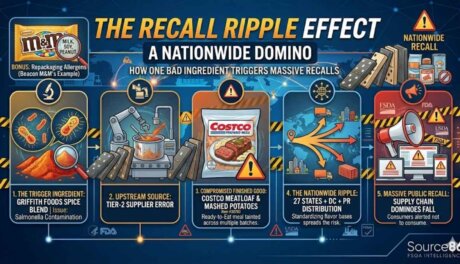
Albertsons Companies is one of the largest food and drug retailers in the United States, operating under banners like ACME, Safeway, Shaw’s, and Star Market. While Albertsons generally maintains a strong safety record, supplier-related issues like this one demonstrate the ripple effect a single contaminated ingredient can have across multiple retail channels.
This isn’t an isolated case in May 2025. Several other produce-related recalls have been announced this month—further underscoring the need for rigorous supply chain safety protocols. For related updates, visit the FDA’s outbreak advisory.
- On May 23, 2025, JFE Franchising, Inc. of Houston, TX, issued a voluntary recall of various fresh-cut cucumber products and sushi items sold under Snowfruit and Snowfox brands due to contact with Salmonella.
- On May 20, 2025, Supreme Service Solutions LLC voluntarily recalled select Yummi Sushi products due to Salmonella outbreak, according to the FDA.
- On May 21, 2025, PennRose Farms, LLC issued a voluntary recall of its whole cucumbers packaged in 5-pound mesh bags due to a Salmonella contamination risk.
- On May 21, 2025, Ukrop’s Homestyle Foods voluntarily recalled its Marinated Cucumber Salad products following an upstream recall of cucumbers by Bedner Growers, which had detected a risk of Salmonella contamination.
- On May 22, 2025, Big Y Foods issued a voluntary recall on some of its made-to-order subs, wraps, and paninis due to contamination with Salmonella.
“A single ingredient—like a cucumber—causing a widespread recall highlights just how vital a transparent and well-managed supply chain truly is. Every link, from farm production to store shelves, must be closely monitored. This recall reinforces the importance of strong traceability systems, rigorous quality checks, and clear communication to protect both consumers and brands alike.” says Eran Mizrahi, CEO of Source86.
Ensuring Safe Eats
This incident is another reminder of how critical it is to maintain strong food traceability systems and thorough supplier vetting. When a single contaminated item enters the chain, it can affect countless stores and consumers—especially in bulk and wholesale manufacturing environments.
For brands, co-packers, and private label producers, proactive recall management strategies are essential. This includes:
- Implementing transparent traceability systems
- Conducting regular supplier audits
- Training staff on recall response protocols
- Maintaining strong quality assurance checks
And of course, if you’re managing bulk ingredients and want to reduce your risk, working with vetted, high-quality suppliers is a must.
Need help sourcing clean, compliant ingredients? Reach out to our team today to explore how we can help you stay ahead of recalls and focused on growth.