





Bulk Poultry Seasoning
Request More Information
Need a quote, more info, or a sample? Fill out the form below, and we’ll be happy to help.
Are you a vendor? Please contact us here.
Product Data
| Product Use | Stuffing mixes, seasoned poultry, marinades |
|---|










Production & Sourcing
Poultry seasoning, a blend of sage, thyme, marjoram, rosemary, celery seed, and black pepper, is crafted by carefully combining these aromatic herbs and spices in precise proportions. The process begins with sourcing high-quality ingredients, typically dried to preserve their flavor and aroma. The herbs are then finely ground to achieve a uniform texture, while the black pepper and celery seed are cracked or ground to release their aromatic oils. These ingredients are mixed thoroughly to ensure an even distribution of flavors, resulting in a well-balanced seasoning blend.
Applications
- Seasonings and Dry Blends
- Marinades
- Brines
- Stuffing Mixes
- Packaged Soup and Sauces
- Ready-To-Eat Meals
- Snack Production
- Seasoned Poultry
- Vegan
- Vegetarian
Functionality
- Flavor Enhancement
- Essential Vitamins
- Essential Minerals
- Antioxidant
Benefits
Poultry seasoning, composed of sage, thyme, marjoram, rosemary, celery seed, and black pepper, offers a harmonious blend of savory, earthy, and aromatic flavors. Sage contributes a robust, slightly peppery taste, while thyme adds a subtle herbal note. Marjoram provides a sweet and delicate flavor, complemented by the piney and floral undertones of rosemary. Celery seed adds a hint of celery-like flavor, while black pepper adds a mild spiciness, completing the flavor profile with depth and complexity.
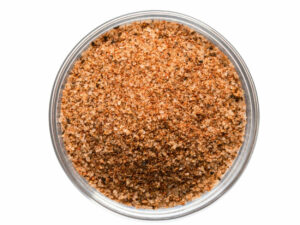
Poultry seasoning typically has a fine and powdery texture due to the ground nature of its ingredients. This texture allows for even distribution and adherence to poultry surfaces, enhancing flavor and aroma during cooking.
The color of poultry seasoning is primarily influenced by the constituent herbs, with shades ranging from green (from herbs like sage and thyme) to brown (from spices like black pepper and celery seed). When mixed together, the seasoning often presents as a muted green-brown hue.
Poultry seasoning contributes some nutritional value derived from its constituent herbs and spices. It contains vitamins, minerals, and antioxidants, particularly from herbs like thyme, rosemary, and sage. However, since it is typically used in small quantities, its nutritional impact per serving is relatively low.
Poultry seasoning may contain ingredients like celery seed, which can contribute to moisture absorption. However, it does not play a significant role in binding ingredients together in recipes due to its powdered form.
The aroma of poultry seasoning is characterized by a rich, savory scent with herbaceous and spicy undertones. The combination of sage, thyme, marjoram, rosemary, celery seed, and black pepper creates a fragrant bouquet that enhances the overall sensory experience of poultry dishes.
Achieving balance in poultry seasoning involves ensuring that no single herb or spice dominates the flavor profile. Each ingredient contributes its unique characteristics, resulting in a well-rounded blend that enhances the natural flavors of poultry without overpowering them.
Poultry seasoning provides contrast to poultry dishes by adding layers of flavor complexity. The savory and earthy notes from herbs like sage and thyme contrast with the subtle sweetness of marjoram and the spiciness of black pepper, creating a dynamic flavor profile.
Poultry seasoning is commonly associated with traditional American and European cuisines, where it is used to flavor various poultry dishes such as roast chicken, turkey, and stuffing. However, similar herb and spice combinations are found in culinary traditions worldwide, reflecting a universal appreciation for aromatic and flavorful seasonings.
Individuals with allergies or sensitivities to any of the ingredients in poultry seasoning should exercise caution.
Uses in manufacturing
Poultry seasoning is often incorporated into seasoning blends and spice mixes used in the production of pre-packaged poultry products such as seasoned chicken breasts, turkey burgers, or breaded chicken tenders. These blends ensure consistent flavor and aroma throughout the product line.
Food manufacturers may use poultry seasoning as a key ingredient in marinades and brines for poultry products. These solutions infuse meats with savory and aromatic flavors, while also helping to tenderize and enhance moisture retention during cooking.
Poultry seasoning is a staple ingredient in pre-packaged stuffing mixes for convenience foods like boxed stuffing, stuffing mixes for stuffed poultry products, or stuffing blends for casseroles. Its blend of herbs and spices adds depth of flavor to the stuffing mixture.
Poultry seasoning can be incorporated into ready-to-eat meals such as chicken pot pies, turkey meatloaf, or rotisserie chicken. These meals offer consumers convenient options for enjoying flavorful poultry dishes with minimal preparation time.
Poultry seasoning is commonly used in the production of soup bases and gravy mixes for poultry-flavored soups, sauces, and gravies. Its aromatic blend of herbs and spices enhances the savory profile of these products, providing a rich and satisfying taste experience.
Poultry seasoning may be used to flavor snack foods like seasoned nuts, popcorn, or crackers, offering consumers savory and aromatic snack options with a poultry-inspired twist.
Poultry seasoning is often included in the production of frozen poultry products such as breaded chicken tenders, turkey meatballs, or chicken sausages. Its flavor profile remains intact during freezing and reheating, ensuring consistent taste and aroma.

Main producing countries and Harvest time.
Poultry seasoning is produced all year round.