

We don’t like junk emails either.
That’s why we only send the good stuff… short, smart, and worth the open.

Source86
Importer of specialty raw ingredients, finished products and anything in between
The brands we supply can be found nationwide at







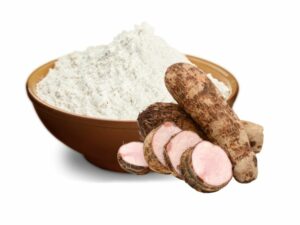
Our Modified Tapioca Starch has E1414 – a stabilizer that helps emulsify fat and prevents fat separation. Crafted from the finest tapioca roots, this specially modified starch, identified by the additive E1414, offers enhanced thickening and texture-enhancing properties! Our Modified Tapioca Starch with E1414 is a powerhouse thickener! It effortlessly transforms soups, sauces, gravies, and fillings into lusciously smooth creations.
This modified starch enhances the quality of bread, cakes, pastries, and cookies, ensuring a delightful, gluten-free culinary experience. This starch excels in creating a crispy coating for meats, vegetables, and snacks, adding a delectable crunch to your favorite recipes! Our Modified Tapioca Starch with E1414 is available in bulk quantities and in customizable packaging options. Request for a quote now to get started! 📨
Need a quote, more info, or a sample? Fill out the form below, and we’ll be happy to help.
Are you a vendor? Please contact us here.
| Scientific Name | Manihot esculenta |
|---|---|
| Origin Countries | Brazil, Thailand, Vietnam, Indonesia. |
| Product Use | Dairy-free alternative, frozen desserts, baby food |









Harvesting: The process starts with harvesting mature, cassava roots. These are tuberous roots that grow underground.
Cleaning and Peeling: The harvested cassava roots are thoroughly cleaned to remove dirt and debris. They are then peeled to remove the outer skin.
Grating: The cleaned and peeled cassava roots are grated into a fine pulp.
Pressing: The grated cassava pulp is then pressed to extract the liquid. This liquid contains both water and starch.
Settling and Separation: The liquid is allowed to sit in large containers. During this time, the heavier starch particles settle to the bottom, while the lighter water rises to the top.
Dewatering: The separated starch slurry is then dewatered to remove as much water as possible.
Drying: The dewatered starch is spread out and dried. The goal is to remove all remaining moisture.
Milling: Once dried, the starch is milled into a fine powder. This results in the familiar white tapioca starch that is used in cooking and food manufacturing.
Modified tapioca starch with E1414, like most modified starches, is typically flavorless. Its primary role is to enhance texture and stability in food products without significantly affecting the overall taste.
This modified starch has a smooth, fine texture similar to regular tapioca starch. It is used to improve the texture and consistency of various food products.
Modified tapioca starch with E1414 is a white or off-white powder. It maintains a neutral color, which is desirable in many food applications.
Modified tapioca starch with E1414, like other modified starches, is primarily composed of carbohydrates and provides minimal nutritional content in terms of vitamins, minerals, or dietary fiber. Its primary function is as a texturizer and stabilizer.
This modified starch is effective at absorbing and retaining moisture, making it useful as a thickening and binding agent in a wide range of food products. It helps improve the texture and consistency of sauces, fillings, and other formulations.
Modified tapioca starch with E1414 is typically odorless and does not contribute any distinct aroma to dishes.
When using this modified starch, it is important to balance it with other ingredients to achieve the desired texture and consistency. It is often used in conjunction with other thickeners and stabilizers to achieve optimal results.
The primary role of modified tapioca starch with E1414 is to enhance texture and stability, rather than introduce a significant contrast in flavor, color, or aroma.
Modified tapioca starch with E1414 is a widely used food ingredient in the global food industry. It is not specific to any particular culture or region, and its use is determined by its functional properties in various food applications.
Modified tapioca starch with E1414 is considered safe for consumption and is generally suitable for individuals with dietary restrictions. It does not contain common allergens like gluten, nuts, or dairy. However, like other modified starches, it is primarily a source of carbohydrates and does not provide significant nutritional value in terms of vitamins, minerals, or dietary fiber. As with any ingredient, individuals with specific dietary concerns should consult with a healthcare professional or nutritionist for personalized advice.
Modified Tapioca Starch with E1414 is a versatile ingredient that finds numerous applications in food manufacturing due to its thickening, stabilizing, and texturizing properties. Here are some common uses:
It is used in bakery goods like bread, cakes, and pastries to improve texture, moisture retention, and shelf life. It helps maintain the freshness and softness of baked goods over time.
Modified tapioca starch with E1414 is used in processed meat products like sausages, meatballs, and deli meats to improve texture, bind ingredients, and retain moisture during cooking.
It is used in products like yogurts, custards, and dairy-free alternatives to enhance creaminess, stabilize the product, and prevent separation.
It acts as a thickening agent in sauces, gravies, and condiments, providing a smooth and consistent texture. It helps maintain viscosity over a range of temperatures.
This modified starch is added to soups and stews to achieve a desired thickness and improve overall mouthfeel. It ensures that the soup or stew maintains its texture during cooking and reheating.
It is used in pie fillings, fruit fillings, and dessert custards to create a smooth, stable consistency. It prevents excess moisture absorption and maintains a uniform texture.
Modified tapioca starch is commonly used in instant food products like instant puddings, instant noodles, and ready-to-eat meals to achieve quick and consistent thickening.
It is used in ice cream and frozen desserts to improve texture, creaminess, and stability during freezing and storage.
In beverages, especially in dairy-based or alternative milk products, it acts as a stabilizer to prevent separation and maintain a smooth, consistent texture.
It is a valuable ingredient in the production of gluten-free products, including bread, pasta, pizza crusts, and snacks. It helps mimic the texture of gluten-containing products.
Modified tapioca starch is used in baby foods to provide a smooth, consistent texture and improve overall palatability.

The main producing countries of Tapioca Starch are Brazil, Thailand, Vietnam and Indonesia.
In tropical regions, where cassava is a year-round crop due to favorable climates, farmers can harvest cassava at any time during the year. However, the main harvest period often falls between six to 18 months after planting, depending on the specific variety and local conditions.
In regions with distinct wet and dry seasons, cassava is typically planted at the onset of the rainy season. The main harvest then usually occurs six to 18 months later, which could span from late spring to early autumn.