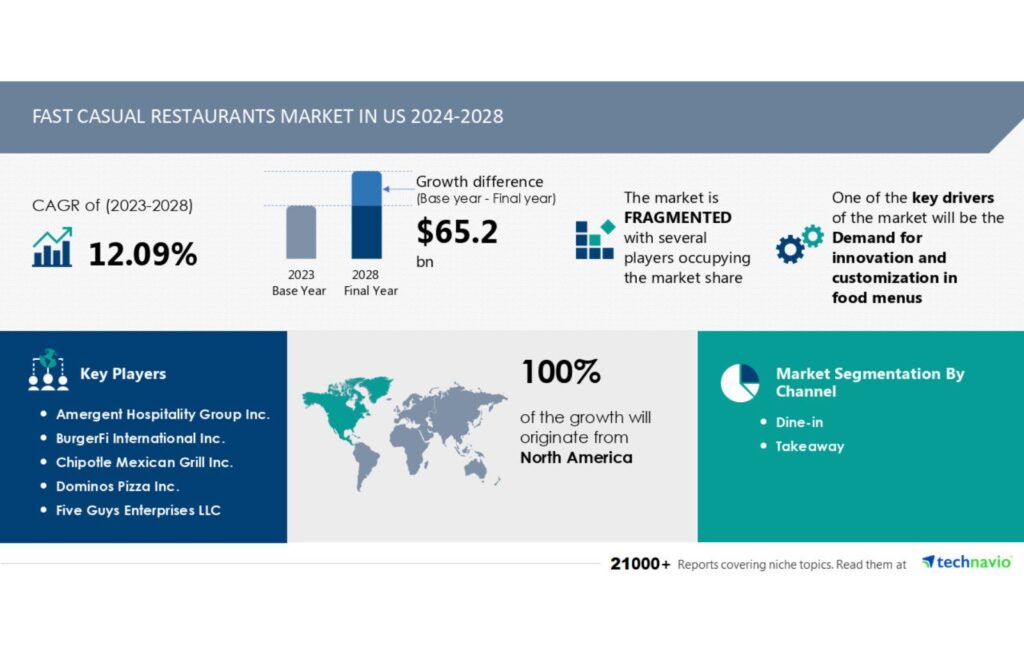
If you’ve ever craved a quick, delicious meal without sacrificing quality, chances are you’ve turned to a fast-casual restaurant. From gourmet burgers to fresh salads and everything in between, fast casual dining has become the sweet spot for consumers who want it all: speed, convenience, and top-notch food. And guess what? This market is heating up! According to new research from Technavio, the U.S. fast casual restaurant market is projected to grow by a staggering $65.2 billion between 2024 and 2028, with an annual growth rate of 12.09%. So, what’s behind this sizzling growth, and why should you care? Let’s dig in!
What makes fast casual different?
It’s a hybrid! Fast casual restaurants combine the best of both worlds: the speed of fast food and the quality of casual dining. While fast food chains are designed for a quick, no-frills experience, fast casual restaurants offer a bit more flair—think better ingredients, more flavor variety, and often, a relaxed atmosphere that encourages diners to stay a while. These spots typically feature counter ordering or self-service kiosks, with customers sitting down to enjoy their meals. There’s no need to wait at a table or wrestle with menus; it’s simple, quick, and you still get a satisfying meal. But what really sets fast casual apart is the food. Gone are the days of greasy burgers and soggy fries. Today’s fast casual restaurants serve up everything from gourmet pizzas to creative salads, global flavors, and even plant-based options. It’s fast food with a conscience—and a serious upgrade in quality.
Why is the fast-casual market booming?
So, what’s driving this $65.2 billion growth? A few key trends are shaping the future of this market, making it a perfect match for today’s consumer demands:
1. Health-Conscious Eating:
Consumers today are more health-conscious than ever before. We’ve all heard the phrase “you are what you eat,” and people are making more mindful food choices. These restaurants are catering to this shift by offering healthier menu options made with fresh, locally sourced ingredients. Think kale bowls, avocado toast, and grain-based salads. And with the rise of vegan, gluten-free, and low-carb options, these restaurants are winning over health-conscious diners who still want a tasty, satisfying meal.
2. Customization Is Key:
One of the biggest draws of this type of dining is the ability to customize your meal. Whether it’s adding extra toppings to your salad, swapping out your sandwich bread for a gluten-free option, or picking your own proteins and dressings, fast casual restaurants give you the power to make your meal your own. And let’s face it, we all love a little control over our food—especially when it means crafting the perfect meal.
3. Convenience Meets Quality:

In a world where time is money and everyone’s always on the go, convenience is king. Fast casual restaurants offer a speedier experience than traditional sit-down dining while still serving high-quality meals. Many of these spots also integrate technology, like self-order kiosks, mobile apps for ordering ahead, and delivery through platforms like UberEats and DoorDash. So, whether you’re grabbing a quick bite between meetings or enjoying a laid-back meal with friends, fast casual dining makes it easier than ever to get your food fast without compromising on flavor.
4. The Growing Demand for Ethnic Flavors:
Americans are craving variety, and these are the answering the call with an ever-expanding selection of global flavors. From Mexican burrito bowls to Mediterranean falafel wraps and Asian-inspired rice bowls, fast casual restaurants are offering consumers a chance to taste the world in one meal. These flavors don’t just bring excitement to the palate—they also introduce customers to new and exciting ingredients, like sriracha, miso, and quinoa.
5. A Sustainable Dining Experience:
Sustainability is no longer just a buzzword—it’s a consumer priority. Fast casual chains are increasingly focusing on eco-friendly practices, including sustainable sourcing, recyclable packaging, and reducing food waste. Many restaurants are also committed to using local, organic ingredients in their dishes, ensuring that their meals are as good for the planet as they are for your taste buds.
Who’s leading the charge?

So, who’s winning the race? Some big names are taking the lead, including household favorites like Chipotle, Shake Shack, Panera Bread, and CAVA. These established chains have mastered the art of serving high-quality, delicious meals at lightning speed. But it’s not just the big players that are thriving. Franchisees and independent restaurants are also seeing massive growth opportunities in this space, with many opening up new locations in cities across the country. Whether you’re craving a gourmet burger from a local joint or a Mediterranean grain bowl from a national chain, there’s no shortage of options in the market.
What’s on the horizon?
The future of fast casual dining looks brighter than ever. As the industry continues to grow, we can expect to see even more emphasis on customization, healthier menu options, and sustainability. The rise of plant-based and alternative protein options will likely continue to reshape the way we think about fast casual dining, and tech innovations like AI-powered ordering systems will make the experience even more seamless. And let’s not forget the importance of atmosphere. Fast casual restaurants aren’t just about the food; they’re about creating a space where people can relax, socialize, and enjoy a meal. Expect more restaurants to embrace modern designs, outdoor seating, and comfortable dining areas that make you want to linger longer.