Food manufacturing is no longer just about efficiency—it’s a high-stakes game of strategy. Should you bet on dependable humans, reliable traditional machines, or the rising star of AI-enabled robotics? Let’s break down this dynamic trio to see who’s stealing the show and how they’re shaping the future of food production. Rajat Bhageria, Founder/CEO of Chef Robotics shares his knowledge on this robotic matter.
Skilled hands or smart sensors?
Traditional machines, like trusty depositors, are champs at repetitive, low-mix tasks. They’re great if your line churns out the same product day after day. But throw in hundreds of SKUs, recipe swaps, or unpredictable ingredient changes, and they fumble.
That’s where humans shine. Adaptable, resourceful, and quick to handle last-minute changes, people are the MVPs for high-mix environments. But rising labor costs and constant retraining needs? That’s their Achilles’ heel.
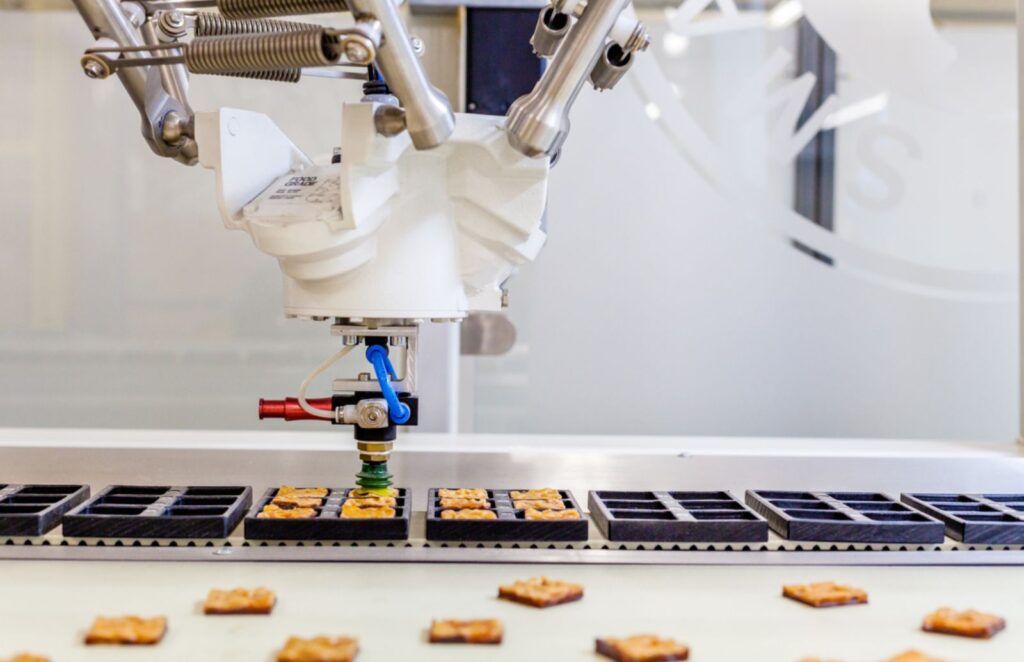
Enter AI-enabled robotics. These high-tech all-stars combine human-like adaptability with machine precision. Using sensors and machine learning, they “see,” “think,” and “act” to handle dynamic tasks like portioning out salads after wrapping burritos. They’re versatile, tireless, and perfect for a chaotic production line.
The winner? Well, that depends. Each player has its strengths, and companies are mixing and matching to find their winning formula.
Deposit, adapt, dominate
For steady, repetitive tasks, traditional automation is a no-brainer. Machines like depositors are reliable workhorses, delivering efficiency at scale. But what about manufacturers juggling hundreds of ingredients or switching from burritos to salads in a single shift? That’s where traditional systems start to crack under pressure.
Humans are the kings of adaptability, stepping in to handle last-minute changes and quirky recipes. But with labor shortages and high turnover, relying on people alone can strain the bottom line.
AI-enabled robotics flip the script. These robots don’t just work—they learn, adjust, and deliver machine-level consistency with human-like flexibility. They thrive in dynamic settings, offering an ROI that’s hard to ignore. But even they aren’t perfect; integration costs and learning curves mean it’s not an overnight solution.
The takeaway? It’s not about replacing one with the other. It’s about balancing the strengths of all three. AI trends are on the rise, offering innovative solutions to tackle challenges in food processing and manufacturing. By working alongside human ingenuity, these technologies optimize production, enhance quality, and reduce waste, paving the way for a smarter, more collaborative future in the industry.
Human, robots, or both?
AI robotics are shaking up the industry with precision, speed, and adaptability that traditional systems can’t match. They’re reducing reliance on labor while ensuring operations run smoother than ever. For businesses navigating high-mix environments, they’re a game-changer.
But let’s not count out traditional machines or humans just yet. Machines are unbeatable for low-mix consistency, and humans bring unmatched intuition to unpredictable challenges.
The future? It’s a team sport. Companies are blending humans, machines, and robotics to tackle the unique demands of food manufacturing.
So, what’s your play?
Whether you’re managing a production line that feels like a juggling act or scaling up operations, the secret sauce lies in the right mix of tools. Robots for precision, humans for creativity, and machines for consistency—each plays a vital role.
Ready to level up? Let’s chat about how to optimize your setup and explore our Source86’ bulk ingredient offerings to keep your production line running smoothly.
Whether it’s robots or humans making the magic happen, great food always starts with great ingredients!