Pizza Hut announced on April 21, 2026 the full launch of its redesigned Hut Rewards program, which debuted at scale during March Madness 2026 and is now being formally introduced as a next-generation loyalty membership. The program is free to join through the Pizza Hut app or at pizzahut.com, and earns points on eligible purchases redeemable on digital orders. Hut Rewards is U.S.-focused. Ashley Travis, Head of Growth Marketing at Pizza Hut, is the spokesperson. Media contact is Alison Brod Marketing Communications.
Pizza Hut is a subsidiary of Yum! Brands, Inc. (NYSE: YUM), founded in 1958 in Wichita, Kansas, and headquartered in Plano, Texas. The brand operates nearly 20,000 restaurants in more than 110 markets and territories worldwide. Over half of all transactions worldwide come from digital orders. Pizza Hut is the Official Pizza Partner of March Madness.
What Changed: From Points Program to Membership Platform
The framing of this announcement is deliberate and worth taking seriously. Pizza Hut is not calling Hut Rewards a loyalty program. It is calling it a membership. That is a structural repositioning that signals a different business model intent.
A traditional loyalty program is transactional: you buy, you earn points, you redeem. The value exchange is entirely in the food purchase cycle. A membership model adds a second value layer above the transaction: access to things that non-members cannot get, regardless of purchase frequency. The distinction matters because a membership model creates a reason to stay enrolled even when you are not buying, while a points-only model provides no reason for a customer to maintain engagement between purchases.
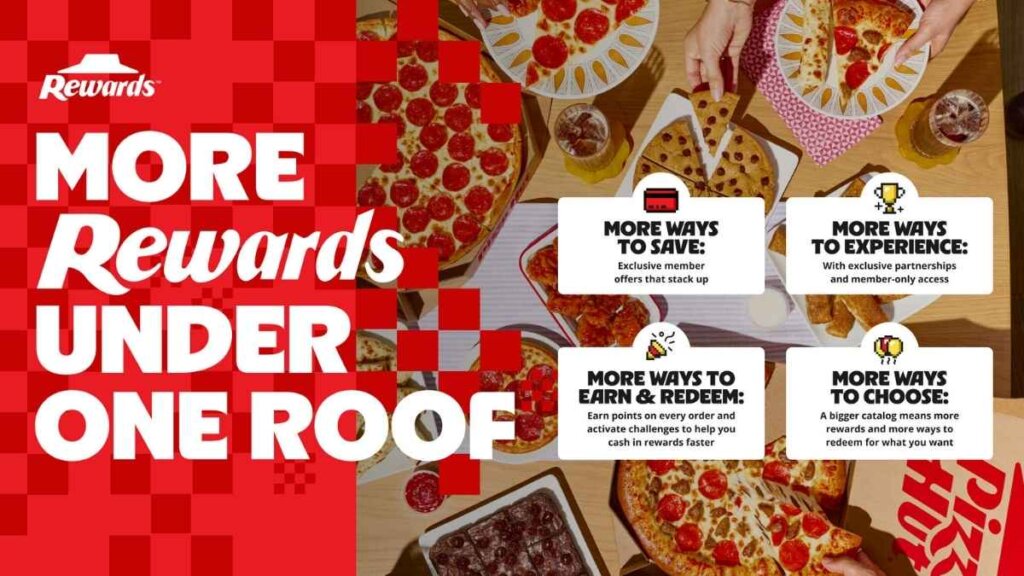
The practical components of the new Hut Rewards as described in the announcement are: points on eligible purchases (the traditional layer), challenges and bonus opportunities to reach rewards faster (a gamification layer), an expanded rewards catalog (broader redemption options), and exclusive experiences and member-only perks (the new membership-differentiating layer).
The March Madness debut demonstrated the membership layer in practice. Pizza Hut executed in-app swag drops exclusively for members, including a limited-edition Space Jam x Pizza Hut merchandise collection tied to the 30th anniversary of the film. The collection sold out completely. That sold-out outcome is the commercial validation Pizza Hut needed to formalize the membership model: when you put genuinely scarce, genuinely desirable non-food items behind the membership wall, people stay enrolled and stay engaged.
The Space Jam Collab as a Template, Not a One-Off
The Space Jam x Pizza Hut merchandise drop during March Madness is the clearest signal of where Hut Rewards is going as a platform. The announcement describes it as a demonstration of “what Hut Rewards is built to unlock, bringing together membership, culture, and exclusivity at scale.” That is program-building language, not campaign language. Pizza Hut is saying the Space Jam drop was a proof of concept, not a standalone event.
The 30th anniversary of Space Jam is a real cultural moment in 2026 for the demographic that grew up watching it in 1996, which overlaps significantly with the pizza delivery-ordering household demographic. Limited-edition branded merchandise tied to a nostalgic pop culture property, dropped exclusively to loyalty members via an app, is a model that Amazon, Nike, and various QSR apps have proven generates app downloads, membership enrollments, and earned media. The fact that the Space Jam x Pizza Hut collection sold out completely confirms the demand exists at Pizza Hut’s membership base.
The next question is what the second Hut Rewards cultural drop will be. The announcement frames the program as designed to evolve over time and teases more ways to earn and experience the brand going forward. For suppliers and co-manufacturing partners tracking Pizza Hut’s brand direction, the Hut Rewards relaunch signals that the brand is actively investing in the membership infrastructure that drives digital order frequency and customer lifetime value, which correlates directly with sustained pizza ingredient throughput at the franchise system level.
The Digital Channel Stake and Why It Matters for Pizza Ingredient Suppliers
The announcement’s disclosure that over half of Pizza Hut’s global transactions already come through digital channels is the operational foundation that makes the Hut Rewards membership model commercially viable. At nearly 20,000 locations with digital-majority transaction volume, Pizza Hut has the data infrastructure to identify, segment, and reward its highest-value customers with a precision that a cash-or-card-only restaurant system cannot achieve.
Digital order dominance at nearly 20,000 locations also means Pizza Hut’s ingredient demand patterns are increasingly predictable at the franchise distribution level. Members who are incentivized to complete challenges and earn bonus points in specific time windows create demand concentrations that are visible in the app ordering data before they hit the production floor. For flour, sauce, cheese, and topping suppliers in Pizza Hut’s distribution network, the shift toward a membership-driven ordering model is a demand planning signal: Hut Rewards promotions and challenges will create measurable spikes in specific menu item demand that are tied to the promotional calendar rather than random consumer behavior.
Pizza Hut’s Broader 2026 Brand Momentum
The Hut Rewards relaunch is happening alongside two other significant Pizza Hut brand moves disclosed in the announcement’s press release sidebar. The Hut Crust Platform was launched to position crust as the brand’s core identity and differentiation driver, accompanied by a search for a “Hut Crust Connoisseur” as a brand ambassador role. The March Madness Space Jam collaboration was the first major cultural moment under the new Hut Rewards framework. And the Hut Rewards relaunch itself is the programmatic infrastructure connecting both the crust platform and cultural activations into a sustained digital engagement loop.
The pattern across all three moves is the same as Chipotle’s and Domino’s current trajectories: build a proven promotional mechanic, build a digital membership infrastructure around it, and use cultural moments and brand collaborations to drive membership enrollment and order frequency simultaneously. Pizza Hut’s version is less polished than Chipotle’s Rewards on Repeat relaunch announced the same week, but the strategic direction is identical.
Why It Matters for Pizza Flour, Cheese, Sauce, and Crust Ingredient Suppliers
Pizza Hut’s Hut Rewards relaunch as a membership platform, combined with the Hut Crust Platform positioning and digital-majority transaction volume across nearly 20,000 global locations, creates a sustained digital order demand environment at the world’s second-largest pizza chain where membership challenges, bonus opportunities, and cultural drops will generate predictable promotional demand spikes for pizza ingredient inputs above the baseline order rate. For wheat flour, mozzarella, tomato sauce, and specialty crust ingredient suppliers in Pizza Hut’s distribution network, the Hut Rewards promotional calendar is now an ingredient procurement planning input alongside seasonal demand patterns.
The Hut Crust Platform’s positioning of crust as the central identity of Pizza Hut’s menu creates a sustained emphasis on crust variety, quality, and differentiation that requires the enriched flour, fat, and leavening ingredient inputs behind Pizza Hut’s signature crust formats including Original Pan and Original Stuffed Crust to be consistently available at the specification required for franchise-level production across a nearly 20,000-location global system. Original Stuffed Crust requires a mozzarella rope or block cheese input that maintains its integrity when stuffed inside the crust edge and baked at pizza oven temperatures. The Hut Crust Platform’s commercial emphasis on crust as the brand’s differentiator signals that stuffed and pan crust formats will receive increased promotional weight in 2026, creating a demand uplift for the specialty crust cheese and dough inputs those formats require.
The March Madness Space Jam merchandise drop’s complete sell-out, combined with Pizza Hut’s explicit framing of it as a template for ongoing membership exclusives, confirms that Hut Rewards will generate recurring cultural activation events that drive app enrollment and order frequency spikes tied to the promotional calendar across the 2026 and 2027 planning horizon. For Pizza Hut’s ingredient distribution partners managing inventory staging across the franchise network, the Hut Rewards promotional calendar becomes as important as the national advertising calendar in predicting demand concentration windows.
FAQs
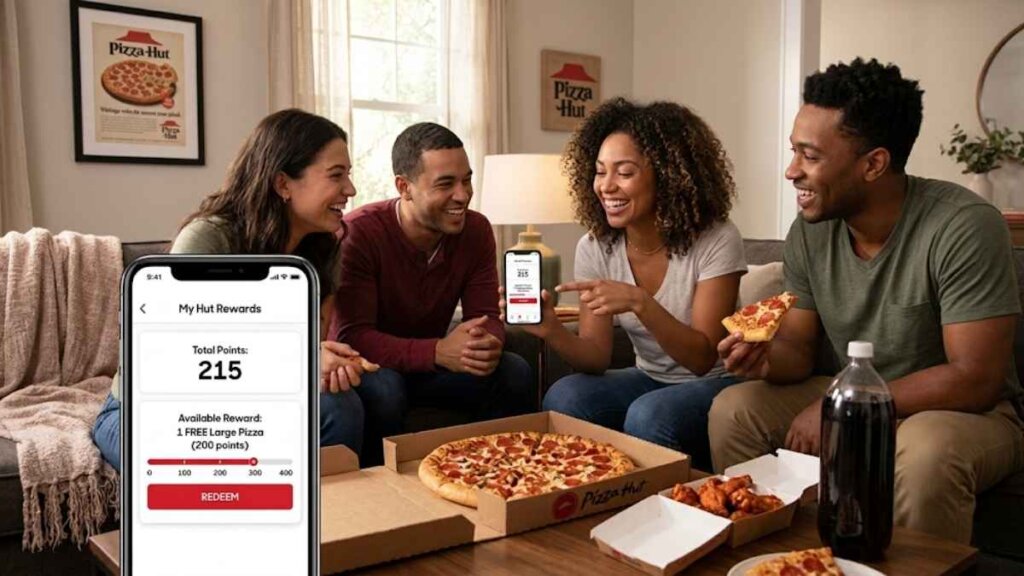
What is the new Hut Rewards? A relaunched loyalty membership program, free to join, available via the Pizza Hut app or pizzahut.com. Members earn points on eligible purchases, access challenges and bonus earning opportunities, redeem from an expanded catalog, and unlock member-only experiences and exclusive drops.
When did it launch? The new Hut Rewards debuted at scale during March Madness 2026. The formal national announcement was made April 21, 2026.
What was the March Madness activation? A limited-edition Space Jam x Pizza Hut merchandise collection tied to the 30th anniversary, dropped exclusively to Hut Rewards members via the app. It sold out completely.
What is the Hut Crust Platform? A concurrent Pizza Hut brand initiative positioning crust, including Original Pan and Original Stuffed Crust, as the central identity of the Pizza Hut experience. Launched with a search for a “Hut Crust Connoisseur” brand ambassador role.
How big is Pizza Hut? Founded 1958, headquartered in Plano, Texas. Subsidiary of Yum! Brands (NYSE: YUM). Nearly 20,000 restaurants in more than 110 markets. Over 50% of global transactions via digital channels.
About Source86
Pizza Hut’s Hut Rewards membership relaunch and Hut Crust Platform positioning reflect the pizza QSR segment’s sustained demand for enriched wheat flour and dough inputs at the specification required for Original Pan and Original Stuffed Crust production across a nearly 20,000-location global franchise system, mozzarella rope and block cheese inputs for stuffed crust applications at the melt integrity and stretch specification required for baked pizza crust formats, tomato sauce inputs in bulk foodservice formats for franchise-level daily production across pizza sauce applications, specialty crust fat and shortening inputs that deliver the characteristic pan pizza base texture across Original Pan and specialty crust formats, and the digital-majority order infrastructure that makes membership challenge-driven promotional demand spikes a predictable planning input for ingredient distribution staging across the Pizza Hut franchise network. At Source86, we connect pizza QSR operators, Yum! Brands franchise system supply chain teams, and foodservice ingredient distributors with trusted bulk and wholesale sourcing partners for enriched flour and dough inputs, stuffed crust mozzarella cheese systems, bulk tomato sauce ingredients, specialty pan and stuffed crust fat inputs, and the ingredient sourcing infrastructure that supports high-volume pizza production at national and global franchise scale.
Whether your production team sources enriched flour for a stuffed or pan pizza crust program, mozzarella rope cheese for a stuffed crust application, or bulk tomato sauce inputs for a franchise pizza production system, Source86 is your bridge to the right manufacturing and supply chain partners. Contact Source86 today to start your sourcing search.