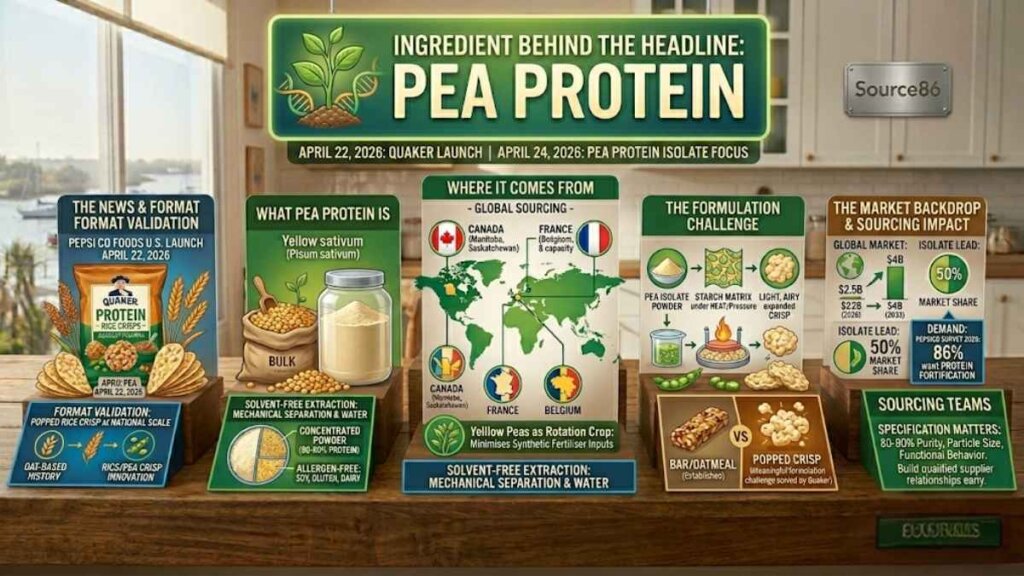
The news: On April 22, 2026, PepsiCo Foods U.S. launched Quaker Protein Rice Crisps nationwide, delivering 6g of protein per serving from a combination of whole grain rice and pea protein isolate. It’s a popped crisp. Never fried. No artificial preservatives or flavors. Two flavors: Chocolate Caramel and Tangy Barbecue. Available at major retailers now.
The headline is a Quaker snack launch. The ingredient story is pea protein entering a format it has never successfully occupied at this scale before. And that distinction matters for every CPG brand, product developer, and sourcing team working in the better-for-you snack category right now.
What Pea Protein Actually Is
Pea protein isolate is a concentrated plant-based protein extracted from yellow split peas (Pisum sativum) through a water-based process that separates the protein from the starch and fiber components of the pea. The result is a powder with 80 to 90% protein content, a well-balanced amino acid profile including lysine (an amino acid that most plant proteins lack), and a digestibility rate above 95%.
Three things distinguish pea protein from the other plant proteins competing for the same CPG applications.
First, the allergen profile. Pea protein is free from soy, gluten, and dairy allergens. That covers the three most common food allergen categories that restrict a significant portion of the functional food consumer base. A protein-fortified snack that uses pea protein can target flexitarian, vegan, lactose-intolerant, and gluten-free consumers simultaneously with a single ingredient choice.
Second, the extraction process. Unlike soy protein, which is commonly extracted using hexane (a chemical solvent), pea protein extraction is solvent-free, relying on mechanical separation and water. That makes pea protein compatible with clean-label formulations and natural certification programs in a way that soy protein often cannot match without additional processing disclosures.
Third, the flavor profile. Pea protein isolate has a relatively neutral, mildly earthy taste compared to soy protein isolate, which can carry a beany off-note that requires masking in finished product formulations. In sweet snack applications like the Chocolate Caramel Quaker crisp, flavor neutrality matters because it allows the flavoring system to perform without competition from the protein base.
Where It Comes From
The raw material for pea protein is yellow split peas, and global cultivation exceeds 14 million metric tons annually. The dominant sourcing regions are Canada (particularly Manitoba and Saskatchewan), France, and Belgium.
Canada is the largest single producer, supplying the North American pea protein manufacturing base. Roquette operates what it describes as the world’s largest pea protein facility in Portage la Prairie, Manitoba, powered by hydroelectric energy and capable of processing 125,000 tons of yellow peas per year. PURIS, which operates in a joint venture with Cargill, runs a large facility in Dawson, Minnesota. ADM has built a plant in North Dakota. Ingredion operates in Nebraska. The North American manufacturing buildout over the past five years has been substantial: the pea protein industry has invested in capacity well ahead of the demand curve, anticipating exactly the kind of mainstream CPG launches that Quaker’s snack debut represents.
In Europe, Cosucra (Belgium) sources yellow peas from farmers in France and Belgium and processes them at a facility in Warcoing. Cosucra’s branded pea protein, PISANE, is used by food manufacturers across more than 45 countries. Roquette also operates a European facility in Vic-sur-Aisne, France. The European supply chain primarily serves the region’s own plant-based food manufacturers and export programs.
Yellow peas are a rotation crop, typically planted after cereal grains to restore nitrogen to the soil. They require minimal synthetic fertilizer inputs compared to corn or soy, produce roughly 500 times fewer greenhouse gas emissions per gram of protein than animal protein, and are grown almost entirely without irrigation in the Canadian Prairies. For CPG brands managing sustainability claims alongside nutrition claims, the upstream agricultural profile of pea protein is one of the most favorable of any protein source currently at commercial scale.
The Formulation Challenge Quaker Just Solved
Pea protein in a granola bar works. Pea protein in oatmeal works. Pea protein in a plant-based burger or a protein shake works. These are relatively forgiving formats where the protein can integrate into the base without creating structural or textural problems.
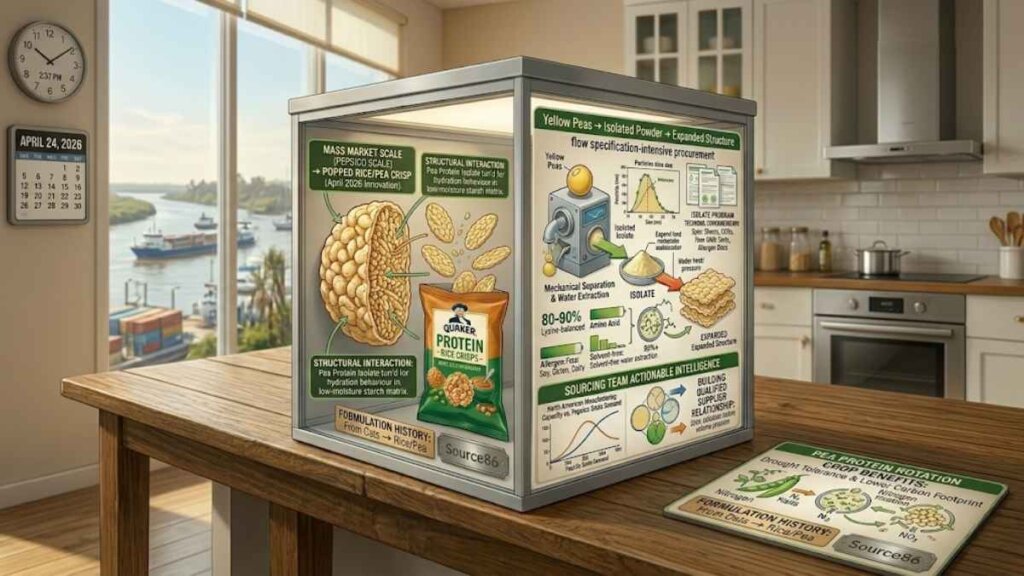
Pea protein in a popped grain crisp is a different problem. The popping process expands the grain base through heat and pressure, creating the characteristic light, airy, low-density structure of a rice crisp. Add protein at a meaningful concentration and you risk increasing product density, compromising the expansion ratio, and creating a chew where there should be a snap. The higher the protein concentration required to hit a 6g per serving claim, the more the formulator has to manage the interaction between the protein’s hydration behavior, its effect on the starch matrix, and its performance under the temperature and pressure conditions of the popping process.
PepsiCo’s R&D team at Quaker has been working in oat-based protein formats for at least two years before this launch. The Quaker Protein Granola Bars and Quaker Protein Instant Oatmeal lines are the formulation history that made the Rice Crisps possible. The popped crisp format required a pea protein isolate specification tuned for this application: particle size, protein concentration range, and functional behavior in a low-moisture starch matrix under expansion conditions. That specification is not a commodity buy. It is a developed ingredient relationship between a large-scale CPG manufacturer and its protein supplier.
For smaller CPG brands watching this launch, the commercial signal is clear: the formulation work has been done at PepsiCo scale, the texture challenge has been solved, and the format is now validated at national retail distribution. The path for other brands to follow into the pea protein popped crisp space is meaningfully shorter than it was before April 22, 2026.
The Market Backdrop
The global pea protein market is valued at approximately $2.5 billion in 2026 and is projected to reach $4 billion by 2033, growing at a CAGR of around 7%. Pea protein isolate leads product type demand with over 50% market share, driven by its high purity, superior functionality, and wide application scope. North America holds the largest regional share at roughly 38%, with Asia Pacific growing fastest.
PepsiCo’s own January 2026 survey data provides the clearest demand-side context: 86% of Americans are actively adding protein to their diets, 70% want protein in their salty snacks, and 65% want protein in sweet snacks. Those numbers are not niche wellness consumer numbers. They represent mainstream consumer demand distributed across the entire snack occasion. Quaker Protein Rice Crisps launching in both a sweet and a savory flavor simultaneously is a direct response to exactly those two numbers.
The broader PepsiCo functional ingredient architecture makes the trajectory clear. Quaker Protein Granola Bars, Quaker Protein Oats, Doritos Protein, SmartFood Fiber Pop, SunChips Fiber, Pepsi Prebiotic Cola, poppi: PepsiCo is running protein, fiber, and prebiotic tracks simultaneously across its snack and beverage brands. The pea protein isolate input is a common thread across the Quaker Protein product line and potentially into other PepsiCo snack formats as the protein track expands. At PepsiCo’s procurement scale, that is a sustained, growing, multi-format demand signal for pea protein isolate suppliers.
Other News
While Quaker is leveraging plant-based pea protein to upgrade the cereal aisle, other brands are bringing massive functional macro boosts to the frozen breakfast section. If you are looking for a hearty, convenient way to start your day, Farm Rich has just launched a new line of savory and sweet morning snacks. Discover how they are packing extra protein into beloved breakfast classics in our coverage of the Farm Rich High-Protein French Toast, Sausage & Hash Brown Bites.
What This Means for Sourcing Teams
If you are a CPG brand developing a protein-fortified snack in 2026, Quaker’s Protein Rice Crisps launch has moved pea protein in a popped crisp format from a speculative formulation challenge to a proven commercial format. The ingredient specification requirement that matters most for this application is isolate purity in the 80 to 90% range, with particle size and functional behavior validated for low-moisture popped grain applications. Suppliers with food-grade pea protein isolate programs and the technical documentation to support a functional snack application (spec sheets, certificates of analysis, allergen documentation, non-GMO certifications) are the right starting point.
On the supply chain side, pea protein isolate demand is growing faster than any other plant protein category. The North American manufacturing buildout has added significant capacity, but demand events at PepsiCo’s scale can create short-window procurement pressure across the supplier base. Building a qualified supplier relationship before you need the volume is the procurement move that protects your product development timeline.
Source86 carries bulk pea protein isolate, including hydrolyzed and fermented organic variants, for functional food and snack applications. If your team is developing in this space, reach out to Source86 and let’s identify the right specification for your format.