Something shifted in American food culture in early 2026, and it did not happen quietly.
Chipotle built its first snack format entirely around protein macros. Smoothie King repositioned itself as a meal replacement competitor by leading with 32 grams of protein per bowl. A frozen pizza startup called Yough launched at Target with Greek yogurt baked directly into its dough. And a digital game offering $2 million in prizes made double protein the central mechanic of its reward structure.
This is not a coincidence. This is a category-wide realignment. And the brands that understand what is actually driving it will have a meaningful advantage over the ones that are simply stamping a protein claim on an existing product and hoping the label does the work.
The Numbers That Started the War
Google Trends data cited in Chipotle’s March 2026 National Burrito Day announcement showed that consumer interest in “protein” and “high protein” reached a record high in 2026. Revenue Management Solutions reported that 62% of consumers say they are likely to order from a protein-rich menu section. Smoothie King’s launch materials cited research showing that protein density has overtaken calorie count as the primary metric consumers use to evaluate whether a food is healthy.
These numbers point to something more significant than a trend. They point to a fundamental reordering of what health means in a food context.
For roughly a decade, the dominant consumer health behavior in food was subtraction: remove calories, remove fat, remove sugar, remove carbs. Protein culture runs on completely different logic. It is additive. More is better. Higher grams per serving is a selling point, not a warning label. The question consumers are asking at the shelf and at the counter has shifted from “what does this not have?” to “what does this give me?”
That is a seismic change for food manufacturers, QSR menu developers, ingredient suppliers, and co-manufacturers. And the brands that recognized it earliest in 2026 are already pulling away.
Chipotle: Protein as a Platform, Not a Feature
Chipotle did not add a high-protein option to its menu. It built an entire High Protein Menu as a permanent platform, with curated builds ranging from 15 to 81 grams of protein per item. Then it launched the High Protein Cup, its first-ever snack format, competing for between-meal consumption occasions for the first time in its history.
The Burrito Vault: Double Protein Edition game made the protein positioning tangible. Players who unlocked the vault during Double Protein Power Hour received BOGO entrées with double protein included by default, turning the game into a trial engine for a premium customization that drives higher per-order revenue. Millions of consumers voluntarily opted into the double protein experience without being upsold at the counter.
Across 4,000-plus locations, a structural increase in double protein orders is not a promotional spike. It is a permanent procurement shift for chicken, steak, carnitas, and barbacoa suppliers. Chipotle’s protein platform is now an ingredient sourcing event that compounds annually.
Smoothie King and Yough: Two Brands, Same Bet
Smoothie King’s Greek Yogurt Bowl launch was built on a specific competitive insight: açai bowls, which drove enormous growth for smoothie brands over the past decade, have a fundamental nutritional problem. They photograph beautifully and feel healthy, but they are typically high in sugar and low in protein. They do not actually perform for the consumer who is eating with protein density in mind.
Smoothie King went directly at this weakness. Its bowls, developed in partnership with Fage, deliver a minimum of 32 grams of protein per serving. The brand explicitly positioned the launch as an açai alternative, targeting the same health-conscious consumer who built that category but is now measuring success in grams rather than antioxidants.
Yough made the same bet in a category even further from traditional protein territory: frozen pizza. By incorporating Greek yogurt directly into its dough formulation and launching at Target, Yough is testing whether the protein trend is powerful enough to change why consumers reach into the freezer case. If it works, the demand implications for yogurt-enriched dough systems in retail food co-manufacturing are significant.
Both launches rest on the same thesis: the protein consumer is no longer contained to gyms, supplement aisles, and nutrition-adjacent brands. They are grocery shoppers, smoothie customers, and frozen pizza buyers. They are everywhere now. And they are making purchase decisions based on protein content in categories that have historically never had to think about it.

The Brands Getting This Wrong
There is a meaningful difference between brands that are rebuilding formulations around protein as a genuine nutritional commitment and brands that are adding “excellent source of protein” to existing labels without changing what is in the product.
Consumers in 2026 are more nutritionally literate than any previous generation. They grew up tracking macros, reading ingredient lists, and comparing grams of protein per dollar across competing options. They know when a protein claim is doing real nutritional work and when it is cosmetic marketing. Brands that add a claim without reformulating are not capturing the protein consumer. They are capturing initial attention and losing them at the next purchase.
Winning the protein war requires formulation commitment: higher protein per serving, named protein sources with clean supply chains, and nutritional transparency that holds up to scrutiny. This has a direct sourcing consequence. Legitimate protein positioning requires supply chain integrity all the way back to the source: named species chicken, certified beef programs, authentic Greek yogurt with verified fat and protein content, and non-GMO whey isolate with documented processing methods. Generic claims require generic ingredients. Credible positioning requires something better.
Other News
While securing a robust protein supply chain and leveraging “double meat” promotions are critical for driving baseline traffic, simply offering high macros is no longer enough to win in 2026. Once the protein is secured on the plate or in the package, brands must use highly specific, premium flavor profiles to justify higher price points and stand out in a crowded market. Just as QSRs are rethinking their center-of-plate offerings, the CPG sector is providing a masterclass in how to season these bases. To understand exactly how international street food and regional heat are completely reshaping consumer expectations, explore our deep dive into Bringing a Global Flavor Perspective to the Snack Aisle. For foodservice operators and CPG formulators, merging an aggressive protein strategy with bold, globally authentic flavor systems is the definitive playbook for maximizing both volume and margin this year.
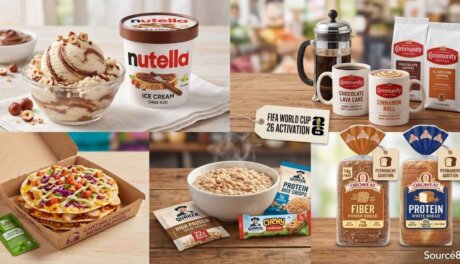
While disruptive, digital-first functional brands initially pioneered the high-protein snacking category, the defining shift of 2026 is how massive legacy CPGs are aggressively reformulating their core portfolios to defend their retail shelf space. Proving that functional fortification is now a mandatory baseline even for traditional, carbohydrate-centric snacks, a legacy breakfast and snacking heavyweight recently launched its new Quaker Protein Rice Crisps, packing 6 grams of protein and 9 grams of whole grains into its highly recognizable format. For CPG strategists and ingredient suppliers, this mainstream product evolution perfectly illustrates the macro trend: protein is no longer a niche requirement for fitness brands, but a universal consumer expectation that is reshaping volume demands across the entire wholesale supply chain.
While tracking the overarching, multi-billion-dollar shift toward high-protein snacking is critical for high-level market strategy, executing this trend on the factory floor requires highly specific ingredient procurement. As legacy brands rush to fortify their carb-heavy portfolios, they are increasingly relying on versatile, plant-based inputs to boost macros without disrupting their traditional flavor profiles or triggering dairy allergens. Highlighting this exact supply chain reality, we recently broke down the Ingredient Behind the Headline, analyzing how Quaker is utilizing highly soluble pea protein to silently fortify its mainstream legacy products. For food scientists, CPG formulation teams, and supply chain directors, bridging this gap between consumer-facing macro trends and granular ingredient sourcing is the ultimate playbook for surviving the 2026 protein wars.
The Supply Chain Opportunity
Every brand that commits to protein-forward positioning creates a sustained procurement requirement that does not go away when the trend coverage fades. Chipotle’s High Protein Menu increases average protein volume per order permanently. Smoothie King’s 32-gram bowl creates a daily sourcing requirement for high-performance Greek yogurt across hundreds of franchise locations. Yough’s frozen pizza creates co-manufacturing demand for yogurt-enriched dough systems at retail scale.
For ingredient suppliers, this is a window to build long-term relationships with brands making structural formulation commitments rather than promotional claims. Becoming a preferred supplier to a brand at the beginning of its protein platform is a fundamentally different commercial relationship than supplying a brand that added a claim to a legacy product.
The protein war is not peaking. It is broadening into frozen food, baked goods, and categories that have resisted nutritional positioning for decades. The brands that treat it as a structural market shift are the ones that will still be winning in 2028. The ones that treat it as a marketing moment will be reformulating again in two years to catch up.
At Source86, we connect food manufacturers, co-packers, and private label operators with wholesale suppliers of high-quality protein inputs, Greek yogurt ingredients, clean-label whey isolates, and specialty protein systems that power protein-forward product development across QSR, frozen food, and retail grocery. Whether you are reformulating an existing product or launching a new protein platform from scratch, Source86 is your bridge to the right partners.