




Bulk Garlic
Air dried powder, granulated, minced, and roasted granules: Source86 imports bulk garlic (Allium sativum) in all four forms, with organic and conventional grades for manufacturers and private label brands.
Garlic is a foundational flavor ingredient across seasoning blends, sauces, marinades, snack seasonings, and processed meat and plant-based formulations. Lots ship from China, India, and Bangladesh, which spreads harvest and cost risk across three origins.
Organic certification covers the powder grade, while Kosher, Halal, and Non GMO documents depend on form and lot.
Tell us the garlic form and mesh your line runs, and we will quote matching lots.
Product Data
| Botanical Identity | Allium sativum |
|---|---|
| Plant Part | Garlic bulb (clove), processed into dried powder, granules, minced pieces, or roasted granules depending on form |
| Available Forms | Air-dried powder (conventional), powder (organic), granulated, minced, and roasted granules |
| Odor and Flavor | Pungent, sharp garlic aroma and flavor across all forms; roasted granules carry a milder, sweeter, caramelized flavor from the roasting process |
| Packaging | 25 kg kraft paper bag for bulk orders; 3 g PP bag available for select formats |
| Shelf Life | 12 months from production date when stored as specified |
| Shipping and Storage | Ship and store dry and at ambient temperature |
| Acid-Insoluble Ash | 1% maximum |
| Pungency Marker (Allicin Potential) | 0.3% to 0.5% by weight, standard for dried garlic |
| Foreign Matter | 0.5% maximum |
| Particle Size | Varies by version: powder forms milled to pass an 80 to 100 mesh screen; granulated to a coarser 20 to 40 mesh; minced left as irregular flake-sized pieces; roasted granules milled to a medium granule size |
| Microbiological Limits | Total plate count, yeast and mold, Salmonella, and E. coli tested to standard spice benchmarks |
| Certification Status | Varies by version: the organic powder is certified organic; the air-dried powder, granulated, minced, and roasted granule forms are conventional |
| Bulk Density | Varies by version: fine powder forms run denser per volume than granulated, minced, or roasted granule forms |
| Dispersibility and Handling Behavior | Varies by version: powder forms disperse readily into liquids and dry blends; granulated, minced, and roasted granule forms disperse more slowly and suit applications where visible texture is desired |
| Treatment Status and Process-Driven Sensory | Varies by version: roasted granules undergo a roasting step that produces a golden brown color and caramelized flavor not present in the air-dried, organic, granulated, or minced forms, which are dried without roasting |
Request More Information
Need a quote, more info, or a sample? Fill out the form below, and we’ll be happy to help.
Are you a vendor? Please contact us here.
Certifications & Compliance
Garlic documents are released per form, origin, and lot. Available on request:
- Certified Organic: Available for the eligible organic powder grade only, with organic transaction certificates and chain-of-custody documentation
- Kosher and Halal:Certificates cover eligible garlic lots for kosher and halal labeled seasonings and foods.
- Non-GMO and Gluten Free: Statements are issued for qualifying powder, granulated, minced, and roasted granule lots.
- Certificate of Analysis (COA): Lot results for acid insoluble ash, foreign matter, allicin potential, and microbiological limits.
- Product Specification Sheet: Particle size by form, from 80 to 100 mesh powder to 20 to 40 mesh granulated.
- Allergen Statement: Allergen Statement: Confirms allergen status for each garlic form ahead of label review.
- Country of Origin Documentation: Country of Origin Documentation: States whether a garlic lot was grown in China, India, or Bangladesh.
- Safety Data Sheet (SDS): Safety Data Sheet (SDS): Addresses the airborne fines released when garlic powder is transferred.
- Heavy Metal Testing: Garlic lots are checked for lead, arsenic, cadmium, and mercury against FDA and EU limits.
- Pesticide Residue Testing: Tested against applicable US and EU maximum residue limits
- Microbiological Testing Reports: Total plate count, yeast and mold, Salmonella, and E. coli results by lot.
Production & Sourcing
Source86 sources garlic from China, India, and Bangladesh to manage seasonal harvest windows and protect buyers from single-origin supply risk. Each origin follows the same core process through cleaning and peeling, with drying, roasting, and milling steps adjusted to produce the specific form and grade ordered.
- Harvesting: Garlic bulbs are harvested once mature, typically during the summer growing season.
- Cleaning: Harvested bulbs are cleaned to remove dirt, debris, and outer skin layers before processing.
- Peeling and Cutting: Cloves are peeled and, depending on the target form, sliced, minced, or left whole ahead of drying or roasting.
- Drying or Roasting: Most forms are air-dried or steam-sterilized and dehydrated to remove moisture; roasted granules are instead roasted until golden brown and caramelized before a final drying step.
- Grinding and Sizing: Dried or roasted garlic is milled to the target particle size, fine for powder, coarser for granulated and roasted granules, or left in irregular pieces for minced.
- Screening and Quality Check: Processed garlic is screened for consistent particle size and inspected before packaging.
- Packaging: Organic garlic powder is packed apart from conventional forms, in 25 kg kraft paper bags for bulk orders.
Applications
- Seasoning Blends and Spice Mixes: A base ingredient across garlic powder, granulated, and minced seasoning blends, including garlic salt formulations
- Sauces, Marinades, and Dressings: Used in pasta sauces, marinades, dry rubs, and dressings for garlic flavor
- Soups, Stews, Stocks, and Broths: A standard ingredient in soup, stew, and broth production
- Snack and Ready-to-Eat Foods: Used in seasoned snacks, chips, and ready-to-eat meal formulations
- Bakery and Prepared Foods: Used in savory breads, crackers, and prepared food products
- Meat, Poultry, Seafood, and Plant-Based Processing: Used in processed meats, sausages, seafood products, and plant-based alternatives
- Prepared and Frozen Meals: Used in frozen entrées, meal kits, and prepared side dishes
- Private Label and Retail-Ready Formats: Granulated, minced, and powder forms are packed for brands selling garlic seasonings under their own name.
Physical & Functional Characteristics
Ranges from fine powder to coarse granules to irregular minced flakes depending on form
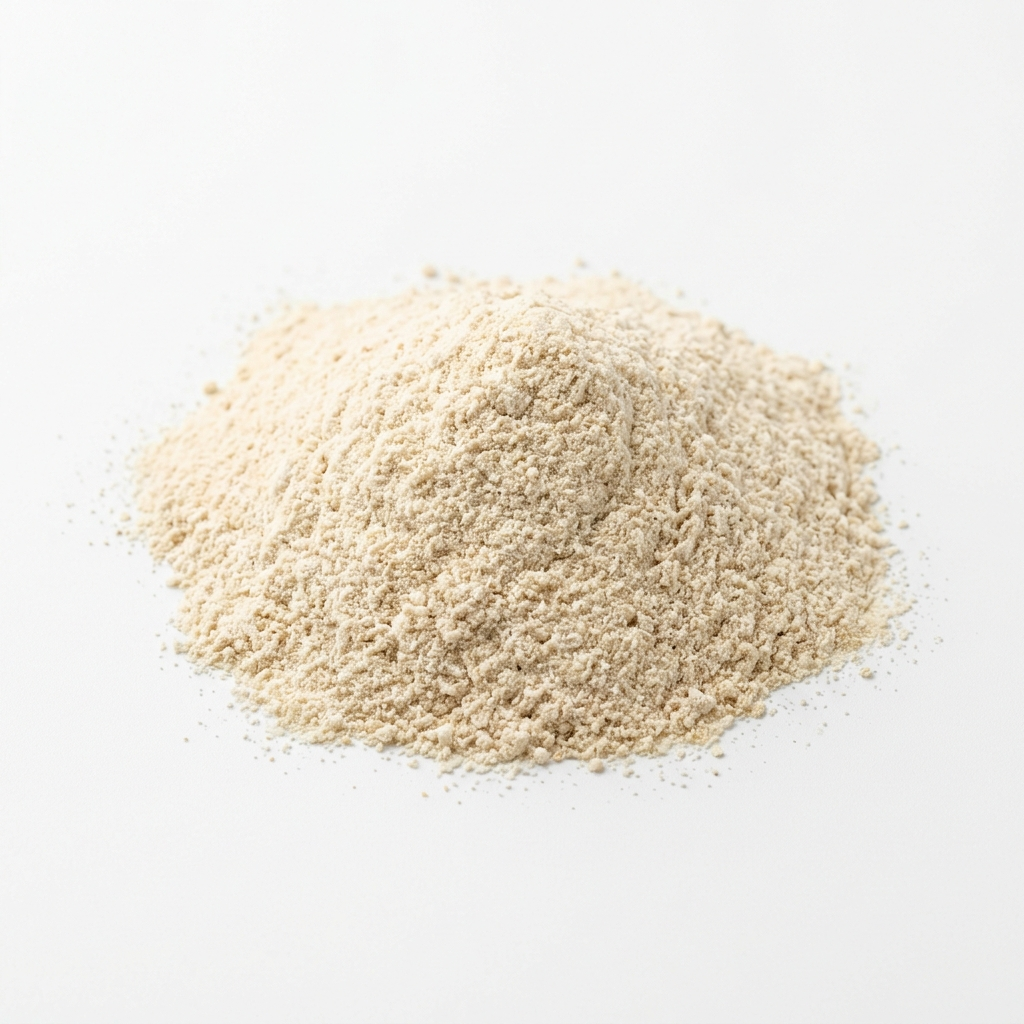
Light beige to medium brown (air-dried powder), pale beige to light brown (organic powder), light cream to pale yellow (granulated), off-white to light yellow (minced), golden brown (roasted granules)
Pungent, sharp garlic flavor across all forms; roasted granules carry a milder, sweeter, caramelized flavor
Strong, characteristic garlic aroma that intensifies when rehydrated or heated
Ranges from fine and powdery to coarse and granular to irregular flake-like pieces
Low moisture content across all forms, supporting shelf stability and ambient storage
Fine powder forms are prone to airborne fines during transfer; granulated, minced, and roasted granule forms are more resistant to clumping but require attention to particle consistency
Contains vitamin C, vitamin B6, manganese, selenium, and allicin-related sulfur compounds
Vegan, vegetarian, gluten-free, and allergen-friendly across all forms
Single-ingredient garlic in each form, with no added carriers or fillers
Color and aroma degrade with prolonged light, heat, and moisture exposure across all forms, favoring sealed, ambient storage
Functionality
- Flavor Enhancement: Contributes concentrated, pungent garlic flavor across dry blends, sauces, and processed foods
- Color Contribution: Powder and granulated forms contribute light beige to golden tones; roasted granules add a deeper caramelized color to finished products
- Dry-Blend Compatibility: Integrates into seasoning blends and dry rubs without segregating from other dry ingredients
- Moisture and Binding Behavior: Dried garlic brings no free water into rubs and spice blends, so they bind without turning damp.
- Dispersibility: Choose powder where garlic should disappear into a sauce; choose granulated, minced, or roasted granules when visible pieces belong in the product.
- Shelf Stability: Low moisture content extends shelf life and supports ambient storage across all forms
- Preservative Function: Contributes a natural preservative effect in processed meat and cured product formulations
- Heat Stability: Roasted granules retain flavor and color through baking, grilling, and other thermal processing
Benefits for Commercial Manufacturing
Available in powder, granulated, minced, and roasted granule forms to match specific formulation and texture requirements
Organic-certified powder available alongside conventional forms to support different labeling needs without switching suppliers
Sourced from China, India, and Bangladesh to reduce exposure to single-region harvest delays or export disruption
The 25 kg kraft paper bag serves industrial lines, while smaller PP bags suit select private label formats.
Controlled drying, roasting, and milling methods deliver consistent flavor and particle size across lots and forms
All garlic forms share the same 12 month shelf life, so one inventory plan covers every SKU.