




Bulk Lentils
Bulk lentils (Lens culinaris) are supplied by Source86 in red, green, brown, black and yellow types, as whole seed, split halves and dehulled football lentils. Conventional grades run above 99.9 percent purity at 12 percent maximum moisture, and split red lentils are held to 5 percent broken kernels or less.
Red lentils are grown and processed in Turkey, while Canadian brown, green, yellow and black lentils are cleaned and packed in Turkish plants. Manufacturers buy them for soups, ready meals, dal, plant based protein products and dry mixes, choosing split types that break down or whole types that hold their shape. Red, green and Laird lentils are also available certified organic.
Request a specification sheet for the type you are evaluating.
Product Data
| Botanical Identity | Lens culinaris |
|---|---|
| Types | Red, green, Laird, brown, black, yellow |
| Forms | Whole, split, football (dehulled whole) |
| Purity | Above 99.9% conventional; 99.5% min organic |
| Moisture | 12% max; 13% yellow split; 14% black |
| Broken Kernels | Split max 3 to 5%; football max 1% |
| Foreign Material | Stones max 1 to 2 pieces per 25 kg |
| Size | Green 5 to 5.5 mm; brown above 3 mm |
| Certification Status | Conventional and certified organic |
| Origin | Turkey; Canada (processed in Turkey); Chile (organic red split) |
| Shelf Life: | 24 months from processing |
| Packaging | 20 or 25 kg bags; 750 to 1,250 kg big bags |
Request More Information
Need a quote, more info, or a sample? Fill out the form below, and we’ll be happy to help.
Are you a vendor? Please contact us here.
Certifications & Compliance
Core Documentation: Certificate of Analysis, specification sheet, origin documentation and SDS issued per lot.
Certified Organic: Available on red split, red football, red whole, green and Laird lentils, with the certifying body named on each label.
Non GMO: Supplier declaration, supported by the fact that lentils are not commercially grown from genetically modified varieties.
Not Irradiated: Supplier statement that the product has not been treated with ionizing radiation.
Testing Support: Pesticide residues tested each crop year against EU limits; heavy metals, aflatoxin and microbiology tested at least annually.
Gluten Cross Contact: Stray cereal grains are limited to 4 per kg on documented Canadian lots, so gluten claims require lot testing.
Site Certification: The Turkish plant processing Canadian brown and black lentils holds BRCGS, IFS, FSSC 22000 and ISO 9001 certification.
Traceability and Metal Detection: Lots are coded for traceability under EC Regulation 178/2002 and pass metal detection before packing.
Production & Sourcing
Turkey is both a lentil growing origin and the processing hub for most of this supply. Red lentils are grown and processed there, while brown, green, yellow and black lentils are grown in Canada and then cleaned, graded and packed in Turkish plants. Organic red split lentils are also documented from Chile.
Lot Release: Moisture, foreign matter and defects are checked on every lot, and each lot is coded for traceability before shipment.
Cleaning: Incoming lentils are cleaned of stones, mud balls, field debris and cereal grains, with stones held to 2 per 25 kg.
Dehulling and Splitting: Red and yellow lentils are dehulled and either left whole as football lentils or split into single cotyledon halves.
Sizing: Lots are screened by size, grading green lentils at 5 to 5.5 mm and limiting football undersize to 3 percent.
Polishing: Conventional splits are water or oil polished to reduce dust, while the organic red whole specification excludes oil polishing.
Metal Detection and Packing: Product passes metal detection set as fine as 1 mm ferrous, then is packed into bags or big bags.
Applications
Snacks: Roasted lentil snacks and lentil based crisps draw on whole and split lentils as the main ingredient.
Soups and Dry Soup Mixes: Red and yellow split lentils are standard in packaged soup mixes and ready to heat soups.
Canned and Retort Products: Whole green and brown lentils go into canned lentils, bean blends and shelf stable pouch meals.
Ready Meals: Chilled and frozen meal manufacturers use lentils in curries, stews, grain bowls and vegetarian entrées.
Dal and South Asian Foods: Split red and yellow lentils are the base of dal and prepared South Asian dishes made at scale.
Plant Based Protein Products: Lentils supply protein and bulk to veggie burgers, meat alternatives and other formed plant based products.
Salads and Prepared Foods: For refrigerated salads and deli items, black and green lentils give a firm, visible particle.
Functionality
Split red and yellow lentils lose their structure as they cook and thicken soups and purées without added starch.
Whole green, brown and black lentils keep the seed coat intact through cooking, holding a defined particle in finished meals.
Removing the seed coat shortens cooking, so split lentils finish well ahead of whole lentils in the same kettle.
Lentils absorb water as they cook, which has to be built into yield, solids and net weight calculations for filled products.
At roughly 24 percent protein, lentils raise the protein content of a recipe without adding an isolate or concentrate.
Red lentils turn from orange to golden yellow as they cook, which affects the final color of soups and sauces.
Physical & Functional Characteristics
Storage Sensitivity: Dry lentils attract storage insects, so lots are released with no live or dead insects and need dry, sealed storage.
Seed Shape: Whole lentils are flat, lens shaped discs; split types are single cotyledon halves with flattened faces and no seed coat.
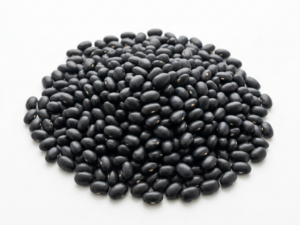
Color by Type: Red lentils show orange red cotyledons, green and brown keep their seed coats, and black lentils are uniformly dark.
Size: Green lentils measure 5 to 5.5 mm across, while brown types are graded above 3 mm with natural size variance.
Flavor and Aroma: Mild, typical legume taste and odor with no foreign notes, which is the sensory release standard on every lot.
Texture: Dry lots are firm, hard and free flowing, with no clumping, mould or abnormal surface moisture at release.
Protein and Fiber: Red whole lentils average 23.9 g protein and 10.8 g fiber per 100 g, with 2.7 g fat.
Composition: Single ingredient lentils with no preservatives; conventional splits may carry a light vegetable oil polish declared on the specification.
Moisture Profile: Moisture is held at 12 percent maximum on most types, rising to 13 percent on yellow split and 14 percent on black.
Dietary Suitability: Plant based and free of gluten proteins, though stray cereal grains from crop rotation determine the gluten status of each lot.
Benefits for Commercial Manufacturing
Lot Level QA Data: Moisture and defect checks run on every lot, giving incoming inspection a documented baseline to test against.
One Spec Structure Across Types: Red, green, brown, black and yellow lentils are specified on the same parameters, so QA compares lots like for like.
Form Matched to Process: Whole, split and football forms let buyers set cook time and texture at purchase rather than adjusting the process.
Two Growing Origins: Turkish and Canadian crops reduce dependence on a single harvest, with both processed through documented Turkish plants.
Organic Option: Red, green and Laird types are available certified organic, so brands can run organic and conventional lines on one ingredient.
Flexible Pack Sizes: Packing runs from 20 and 25 kg bags to 1,250 kg big bags, matching batch kitchens and high volume lines.
Long Shelf Life: A 24 month shelf life from processing lets buyers cover a full crop year with fewer purchases.