




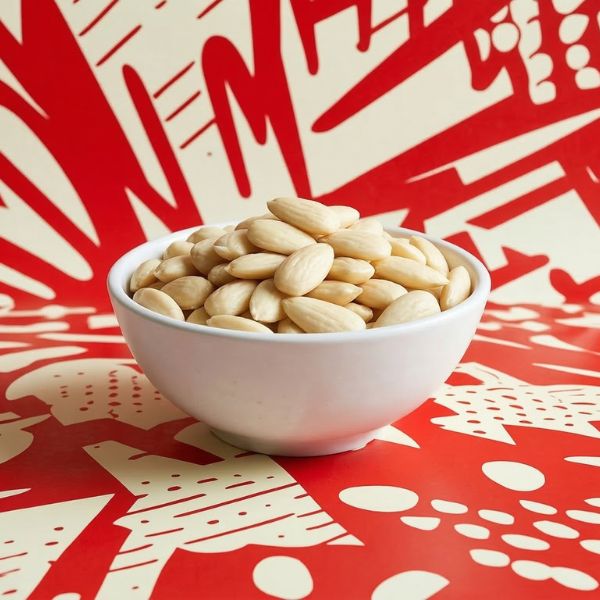
Bulk Almonds Blanched Pieces
Indulge in culinary refinement with our premium Blanched Almonds, a testament to quality and versatility!
Blanched almonds play a crucial role in food manufacturing due to their unique texture and appearance. Blanched almonds have a smooth, skinless surface, which makes them ideal for applications where a smooth texture is desired.
This is particularly important in products like nut butters, where a creamy consistency is desired. This ingredient can absorb flavors more readily than almonds with skins. This makes them excellent for applications where they’ll be used in sauces, dressings, or flavored coatings!
The absence of skins makes blanched almonds easier to blend and process into various products like almond flour, almond milk, and other almond-based ingredients!
Order our Blanched Almonds in bulk quantities, in customizable packaging options for your business needs 📦
Request for a Quote now to get started! 📨
Source86 is your number one supplier for premium bulk raw ingredients! ☝🏼
From sourcing to importing, our global team of trusty sourcerers is committed to getting you only the best ingredients in the market! 💯
If what you need is a Retail-Ready Trail Mix or Nuts solution, this is for you!
Request More Information
Need a quote, more info, or a sample? Fill out the form below, and we’ll be happy to help.
Are you a vendor? Please contact us here.
Product Data
| Scientific Name | Prunus dulcis |
|---|---|
| Origin Countries | USA, Spain and Australia |
| Product Uses | Sauces and dips, coatings and garnish, salad and side dishes |







Production & Sourcing
Blanched Almonds are created through a meticulous process that begins with harvesting mature almonds from almond trees. Once harvested, the almonds undergo blanching, which involves briefly immersing them in boiling water to loosen the skin.
Following blanching, the almonds are rapidly cooled and then mechanically processed to remove the now-loose skin, revealing the smooth, pale inner kernel. These blanched almonds are then thoroughly dried to ensure their quality and longevity.
Applications
- Baked Goods
- Almond Flour Production
- Seasonal and Speacialty Foods
- Almond Milk Products
- Sauces and Dips
- Nut Butters and Spreads
- Confectionary
- Salad and Side Dishes
- Coatings and Garnish
- Vegan
- Vegetarian
- Paleo
- Private Label
Functionality
- Essential Minerals
- Vitamin E Boost
- Plant-Based Protein
- Dietary Fiber Enrichment
- Healthy Fats
- Texture
Benefits
Blanched Almonds have a mild, nutty flavor with a slightly sweet undertone! The blanching process removes the skin, resulting in a smoother, less bitter taste compared to almonds with the skin intact.
Blanched Almonds have a firm and crunchy texture, similar to whole almonds. They are slightly softer compared to sliced almonds due to the absence of the skin.
Blanched Almonds are cream-colored or light beige, as the blanching process removes the brown skin, leaving behind the smooth, pale inner kernel.
Blanched Almonds have the same nutritional value as whole almonds, as the blanching process does not significantly alter their nutritional content. They are a rich source of vitamin E, healthy fats, protein, dietary fiber, magnesium, and various other minerals.
Blanched Almonds are versatile in culinary applications. They can be used in recipes where the skin’s texture and color might be undesirable, such as in almond flour, desserts, or sauces.
Blanched Almonds have a characteristic nutty aroma, similar to whole almonds. This aroma becomes more pronounced when they are toasted.
Blanched Almonds provide a balanced nutty flavor that complements a wide range of ingredients. Their mild taste allows them to work well in various recipes.
In recipes, blanched almonds offer a satisfying crunch and a smoother texture compared to almonds with the skin. They can provide a delightful contrast when used in conjunction with other ingredients.
Blanched Almonds are used in various cuisines around the world. They are particularly favored in recipes where a smoother appearance is desired, such as in French pastries and desserts.
Blanched Almonds are a tree nut and can trigger allergies in some individuals. However, removing the skin through blanching doesn’t significantly change their allergenic potential. It’s important to be cautious if you have known nut allergies.
Uses in manufacturing
They are commonly used in pastries, cakes, cookies, and other baked goods. Their smooth texture and mild flavor make them a versatile ingredient.
Blanched Almonds are ground into almond flour, which is a popular gluten-free alternative in baking. It’s used in recipes for cakes, cookies, pancakes, and other baked goods.
Blanched Almonds are a primary ingredient in the production of marzipan and almond paste, which are used in various confections and desserts
Blanched Almonds are often used to make almond milk, a dairy-free alternative. The absence of skin results in a smoother texture and appearance for the milk.
hey can be ground or processed into a smooth paste and used as a base for sauces, dressings, and dips.
Blanched Almonds can be processed into almond butter, which is a popular alternative to peanut butter. It is used in spreads, energy bars, and various recipes.
Blanched Almonds are frequently used in French pastry recipes like frangipane, a rich almond filling used in tarts and cakes.
They are used in various confections like nougat, pralines, truffles, and chocolate-covered almonds.
Blanched Almonds are used as toppings for salads and incorporated into side dishes to add texture, flavor, and nutritional value.
Ground blanched almonds are used as coatings for meat, poultry, and fish, adding a nutty crust and enhancing flavor.
Blanched almond flour is used as a key ingredient in gluten-free baking mixes for muffins, bread, and other baked goods.

Main producing countries and Harvest time
The United States, Spain and Australia are among the world’s main producers of almonds. In the United States, the harvest season for almonds occurs from August to October.