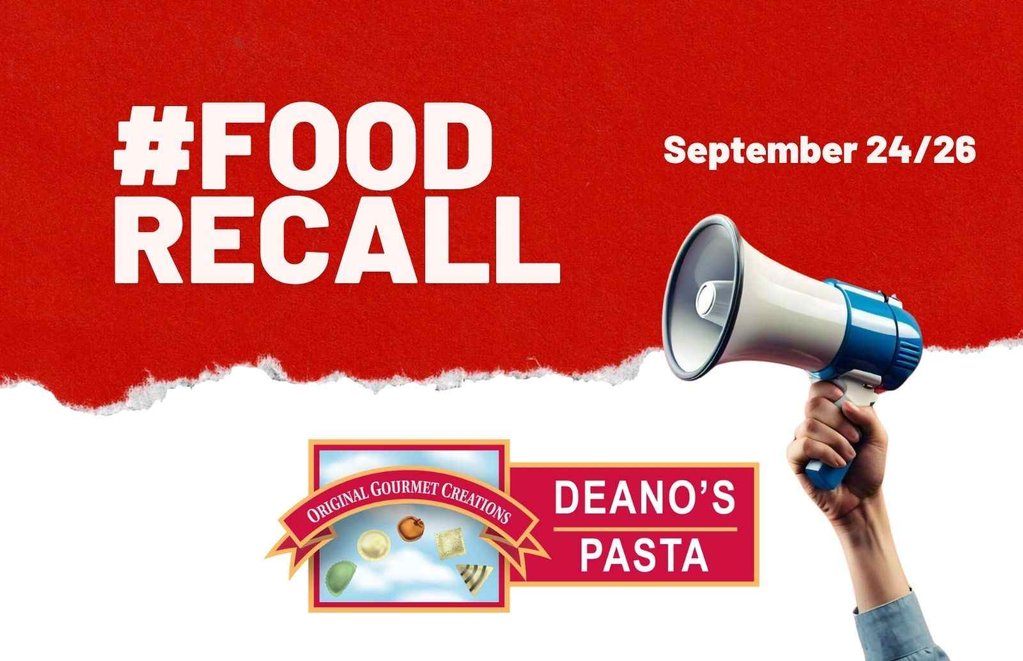
SOMERVILLE, Mass. (September 24, 2026). The U.S. Food and Drug Administration announced that Deano’s Pasta is recalling approximately 20 pounds of Pear and Pecorino Triangoli Ravioli because it may contain undeclared lobster.
According to the FDA-posted announcement, a customer complaint prompted an internal audit that found lobster-containing product had entered packaging that did not disclose the allergen. So far, no illnesses have been reported in connection with the recalled product.
Deano’s Pasta recall: quick summary
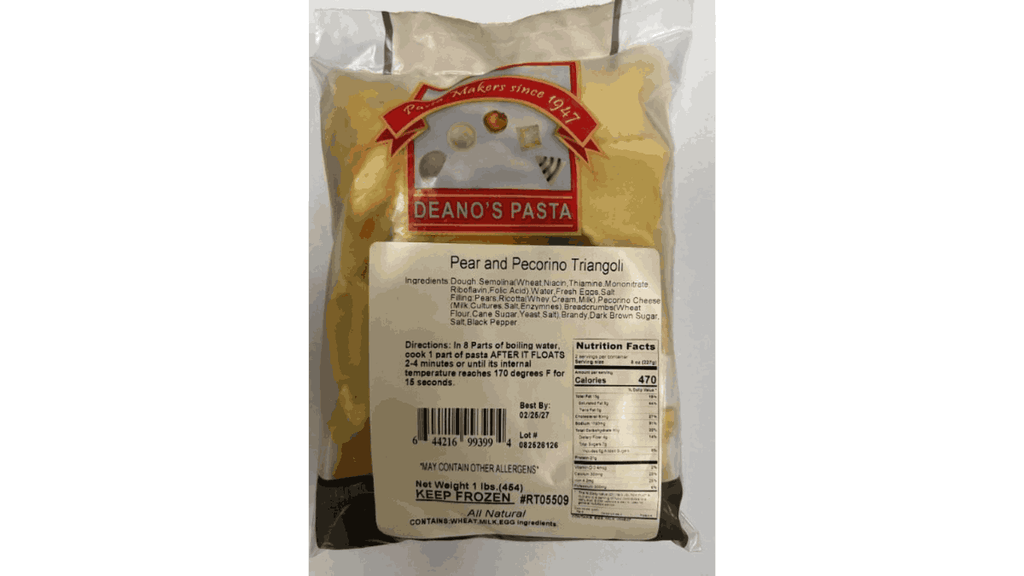
Deano’s Pasta is recalling 1-pound frozen bags of Pear and Pecorino Triangoli Ravioli because the product may contain undeclared lobster, a Crustacean shellfish allergen.
Specifically, the recall covers four lot codes: 090126126, 082526126, 081826126, and 073126126. Additionally, Deano’s Pasta distributed the affected ravioli to retail stores in Massachusetts between August 10 and September 22, 2026.
According to the FDA-posted announcement, the company initiated the recall after a customer complaint led to an internal audit. Subsequently, the company’s investigation identified a temporary breakdown in its production and packaging processes.
Official recall details
- Company announcement date: September 24, 2026
- FDA publication date: September 24, 2026
- Announced by: U.S. Food and Drug Administration (FDA)
- Company: Deano’s Pasta
- Brand: Deano’s Pasta
- Product: Pear and Pecorino Triangoli Ravioli
- Issue: Undeclared Crustacean shellfish (lobster) allergen
- Amount recalled: Approximately 20 lbs.
- Package size: 1 lb. frozen bags
- Lot codes: 090126126, 082526126, 081826126, and 073126126
- Lot code location: Product label under the best-by date
- Distribution: Massachusetts retail stores between August 10 and September 22, 2026
- Reported illnesses: None
- Consumer action: Do not consume the recalled ravioli. Return it to the place of purchase for a full refund.
- Consumer contact: Deano’s Pasta at (617) 623-0013, Monday through Friday from 9 a.m. to 5 p.m. EST
What happened?
According to the FDA-posted announcement, Deano’s Pasta initiated the recall after receiving a customer complaint. Specifically, the complaint prompted an internal audit that identified a packaging problem involving the company’s Pear and Pecorino Triangoli Ravioli.
The audit found that product containing lobster had been distributed in packaging that did not disclose the allergen. As a result, Deano’s Pasta recalled approximately 20 pounds of the affected ravioli.
Additionally, the company packaged the frozen ravioli in 1-pound bags and distributed them to Massachusetts retail stores between August 10 and September 22. Meanwhile, consumers can find the affected lot codes on the product label beneath the best-by date.
Importantly, the company reported no illnesses associated with the recalled product as of September 24.
Affected products
Brand | Product | Size | Lot codes | Issue | Distribution |
|---|---|---|---|---|---|
Deano’s Pasta | Pear and Pecorino Triangoli Ravioli | 1 lb. frozen bag | 090126126, 082526126, 081826126, 073126126 | Undeclared lobster | Massachusetts retail stores |
What caused the issue?
According to the FDA-posted announcement, a customer complaint led Deano’s Pasta to conduct an internal audit. Specifically, the audit found that product containing lobster had been distributed in packaging that did not reveal the allergen.
The company’s subsequent investigation attributed the problem to a temporary breakdown in its production and packaging processes. However, the announcement does not provide additional details about the specific step or process failure that caused the packaging error.
In addition, lobster belongs to the Crustacean shellfish category, one of the nine major food allergens recognized in the United States. Therefore, people with a lobster allergy or severe sensitivity can face serious or potentially life-threatening allergic reactions if they consume the affected product.
Food Safety Insight
“When a facility handles crustacean shellfish alongside products with different allergen profiles, allergen controls need to address more than the information printed on the package,” said Kristina Gaynilo, Food Safety QA at Source86.
“Clear ingredient segregation, sanitation procedures, and production controls can help teams reduce cross-contact risks while maintaining appropriate safeguards throughout manufacturing.”
Here’s what you should do
Consumers who purchased Deano’s Pasta Pear and Pecorino Triangoli Ravioli should:
- Do not consume the product if it matches the recalled lot information.
- Check 1-pound frozen bags for lot codes 090126126, 082526126, 081826126, or 073126126.
- Look for the lot code on the product label beneath the best-by date.
- Return affected bags to the place of purchase for a full refund.
- Contact Deano’s Pasta at (617) 623-0013 with questions, Monday through Friday from 9 a.m. to 5 p.m. EST.
Behind the brand
Deano’s Pasta is a Somerville, Massachusetts-based pasta company that produces handcrafted pasta products. The family business traces its pasta-making history back decades and offers fresh and dry pasta, including filled varieties such as ravioli.
The company describes its products as handcrafted using fresh ingredients and traditional pasta-making methods. Deano’s Pasta also supplies pasta to restaurants and retailers in the Greater Boston area.
Other relevant recalls
Other Source86 coverage involving undeclared allergens and labeling controls includes:
- GF Blends Recalls Truly AIP and EAT G.A.N.G.S.T.E.R. Mixes Over Undeclared Wheat Gluten
- J. HIGGS Recalls Loaded Bacon & Cheddar Potato Chips Over Undeclared Soy Allergen
- Whole Foods Market Recalls Cabricharme Cheese Over Undeclared Egg Allergen
- Created Fresh! Recalls Cranberry Chicken Salad Wedge Sandwiches Over Improperly Declared Egg Allergen
Regulatory context
The FDA recognizes Crustacean shellfish, including lobster, crab, and shrimp, as one of the nine major food allergens in the United States.
Federal allergen labeling requirements require packaged foods containing major food allergens to identify the allergen source on the label. For Crustacean shellfish, manufacturers must identify the specific species, such as lobster, rather than relying only on the broader term “Crustacean shellfish.”
For manufacturers and Co-Packers, this requirement makes packaging and label controls particularly important when facilities handle products with different allergen profiles. Label reconciliation, changeover procedures, packaging verification, and documented release checks can help prevent the wrong packaging from reaching consumers.
In this case, Deano’s Pasta specifically identified a temporary breakdown in its production and packaging processes. The recall therefore highlights how allergen controls extend beyond ingredient management to the packaging stage.
Ensuring safe eats
Ultimately, the Deano’s Pasta recall highlights the importance of maintaining allergen controls through every stage of production and packaging. Even when a product is manufactured correctly, incorrect packaging can leave consumers without critical allergen information.
Manufacturers and Co-Packers can strengthen these controls through label verification, packaging reconciliation, documented changeovers, allergen checks, and final-product review. In addition, clear records can help teams identify affected inventory quickly when a labeling problem emerges.
For now, consumers should check Deano’s Pasta Pear and Pecorino Triangoli Ravioli for the affected lot codes. As a result, people with a lobster or Crustacean shellfish allergy should avoid recalled bags and return them for a refund.
Crustacean shellfish is one of the hardest allergens to control on shared filled-pasta lines, and Source86 maps every allergen run on a co-manufacturer’s line before approving a new product. Launching a filled pasta or other multi-allergen product? Get an allergen line review.