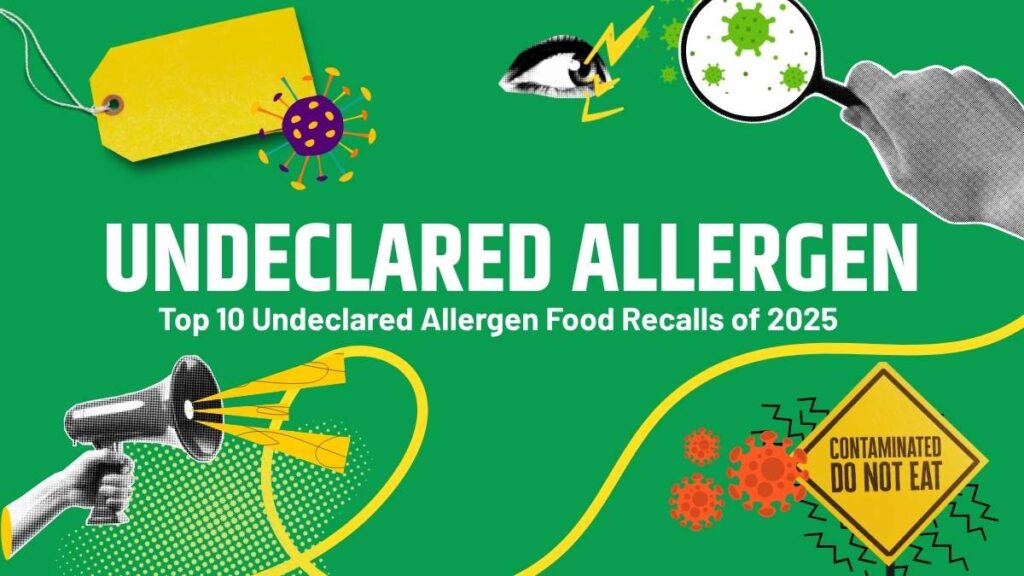
Undeclared allergens aren’t just a labeling mistake—they’re a potentially life-threatening risk. Each year, the FDA issues recalls triggered by missing allergen warnings, from peanuts and milk to soy and sesame. In 2025, these silent threats continued to plague the food industry, showing up in everything from chocolates to vitamins.
Tracking these recalls helps consumers stay safe, while also shining a light on where food brands need to tighten up their labeling, packaging, and quality control.
A Quick Look at 2025’s Allergen Recall Trends
2025 has seen a sharp uptick in allergen-related recalls—especially in categories like snacks, supplements, and baked goods. Many incidents stemmed from cross-contamination at co-manufacturing facilities or packaging mix-ups that skipped critical allergen disclosures.
Some patterns we’ve seen:
- Undeclared peanuts, milk, and soy remain the top culprits.
- Private label products are particularly vulnerable due to supply chain complexity.
- Several recalls involved reformulated products with updated ingredients that never made it onto the label.
2025’s 10 Biggest Allergen Recalls

Here are the most significant undeclared allergen recalls of 2025 so far, based on product distribution, consumer risk, and FDA classification.
- On May 22, 2025, the FSIS issued a public health alert for chicken soup products under the Signature SELECT brand due to undeclared wheat, a common allergen.
- On April 25, 2025, On April 24, 2025, New England Village Foods, based in Milford, New Hampshire, issued a voluntary recall of their “19th Hole Snack Mix” due to undeclared almonds.
- On April 24, 2025, New England Village Foods issued a voluntary recall of their “19th Hole Snack Mix” due to undeclared almonds.
- On April 12, Dianne’s Fine Desserts issued a Class II recall on 1,191 cases of its Cookie Butter Banana Pie due to undeclared almonds.
- On April 1, 2025, Dr. Praeger’s Sensible Foods Inc. recalled its California Veggie Fries (8 oz) due to an undeclared soy allergen. The recall was officially launched on April 1, 2025, but no, this isn’t an April Fool’s joke.
- On March 5, 2025, Blooming Import Inc. initiated a recall of 74 cases of its Golden Crop Candy due to undeclared Blue 1 and Red 40, and the food dye Acid Red 18.
- On February 25, 2025, Natural Dior LLC voluntarily recalled multiple lots of its dietary supplement, Vitafer-L Gold Liquid, due to the presence of undeclared tadalafil.
- On February 18, 2025, Naturipe Value Added Fresh LLC issued a recall for its Berry Buddies, Berries & Pancakes snack packs due to undeclared wheat and eggs.
- On January 8, the FSIS issued a health alert for Rajbhog Foods Inc. Better Goods Chicken Curry Empanadas due to undeclared Milk.
- On January 20, 2025, Wismettac Asian Foods, Inc. issued a recall for their Shirakiku Curvee Puffs Corn Puff Snack Curry Flavor, Sea Salt & Umami Flavor and Corn Potage Flavor due to the presence of undeclared milk.
What These Recalls Tell Us
These aren’t just small errors. They’re violations that can trigger serious consumer health issues, particularly for children and individuals with severe allergies.
Among all the undeclared allergen recalls so far in 2025, three allergens stand out: peanuts, milk, and soy. These ingredients are commonly used across a wide range of food categories, from snacks and supplements to frozen meals. Their presence can easily be overlooked during formulation changes, cross-contact events, or packaging errors.
- Peanuts pose a high-risk due to the severity of allergic reactions they can trigger.
- Milk, often hidden in processed or baked goods, frequently goes undeclared in reformulated recipes.
- Soy, a common additive in flavorings and emulsifiers, often flies under the radar unless strict labeling protocols are in place.
Their repeated appearance on recall notices highlights ongoing gaps in allergen management and underscores the need for better cross-functional coordination in manufacturing and quality control.
Preventing the Next One
So, how can food brands—and especially private labels—stay ahead of these costly and dangerous mistakes?
- Review and update labels with every formula change, no matter how small.
- Invest in robust allergen testing and validation, especially with shared lines.
- Train teams on allergen protocols at every stage—from R&D to packaging.
- Audit suppliers and co-manufacturers regularly to ensure compliance.
Want to stay ahead of the next allergen-related recall? Sign up for Source86 alerts or explore our Private Label Catalog to build products backed by strong compliance from the start.