



Bulk Chia Seed Flour
$0.00
Source86’s bulk chia seed flour is a fine, gluten-free flour milled from black chia seeds (Salvia hispanica L.), sourced from established processors in Paraguay and Peru. It is supplied mainly as partially defatted flour milled from cold-pressed chia press cake, in conventional and certified organic grades, with high fiber and plant protein content for commercial formulation.
Chia flour is used across gluten-free bakery, plant-based foods, bars and snacks, beverages, sauces and soups, and protein and fiber blends.
Available in bulk, Source86 supplies chia flour to procurement teams, R&D departments and food manufacturers at scale. Certifications, including USDA Organic and JAS Organic, are available upon request.
Ready to evaluate it for your formulation? Request a quote or sample today.
Product Data
| Scientific Name | Salvia hispanica L. |
|---|---|
| Common Name | Chia flour, chia powder, chia seed flour |
| Plant Part Used | Seed (black chia) |
| Ingredients | 100% chia seed press cake (partially defatted grades); 100% chia seed |
| Available Grades | Partially defatted, conventional and organic |
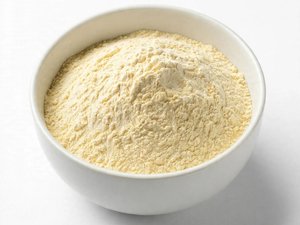
| Appearance | Fine, homogeneous powder; gray-brown to dark brown |
| Odor and Flavor | Neutral to mildly nutty |
| Moisture | 6–10% max |
| Particle Size | 95% through 60 mesh on fine grades |
| Protein | Approx. 22–26% |
| Dietary Fiber | Approx. 38–52% |
| Fat | Approx. 7% (partially defatted) |
| Origin Countries | Paraguay, Peru |
| Packaging | 10 kg HDPE bags in 20 kg cartons; 15 kg kraft bags; 20 kg vacuum-packed bags; 25 kg bags; 1,000 kg big bags |
| Shelf Life | 12 to 36 months, depending on grade |
| Storage Conditions | Cool, clean and dry, protected from light and moisture, in tightly closed packaging |
Request More Information
Need a quote, more info, or a sample? Fill out the form below, and we’ll be happy to help.
Are you a vendor? Please contact us here.
Certifications & Compliance
Source86 supplies bulk chia flour with documentation commonly required for commercial ingredient sourcing and supplier qualification.
Documentation available upon request: Certificate of Analysis (COA) · Specification sheet · Nutritional information · Allergen statement · Country-of-origin documentation · Safety Data Sheet (SDS)
Certifications and statements (availability may vary by supplier, origin and production lot): USDA Organic · JAS Organic · Gluten-Free · Non-GMO
For quality assurance teams requiring additional documentation, including aflatoxin, heavy metals, pesticide residue or extended microbiological testing, requests can be accommodated on a per-order basis. Contact our team to confirm documentation for your compliance requirements.
Production & Sourcing
Source86 sources chia flour from established processors in Paraguay and Peru, two leading chia-producing countries in South America. Sourcing from more than one origin supports year-round availability and reduces dependency on any single region or harvest.
How It’s Produced
- Harvesting: Mature chia seeds are harvested and dried in the field.
- Cleaning: Seeds are cleaned and sorted to remove stones, stems and foreign matter, reaching high purity.
- Cold Pressing: Seeds are cold-pressed to extract chia oil, leaving a protein- and fiber-rich press cake.
- Milling: The press cake is milled into a fine, homogeneous flour.
- Sieving, Testing and Packing: Flour is sieved to the specified mesh, tested against specification and packed, including vacuum or nitrogen-flushed formats.
Harvest & Supply Availability
In the Southern Hemisphere, chia is typically harvested from February to April. Dried seed is stored and processed year-round, so bulk chia flour is available throughout the year.
Applications
Breads, muffins, pancakes and cookies, as part of gluten-free flour blends.
Veggie burgers and meat alternatives, as a binder.
Vegan baked goods and batters, as a gel-forming egg replacer.
Protein bars, energy bars, crackers and extruded snacks.
Smoothies, shakes and drink mixes, adding body and fiber.
Natural thickening in savory systems.
Plant protein powders, meal replacements and fiber blends.
Cereals, oatmeal and yogurt inclusions.
Physical & Functional Characteristics
- Appearance: Fine, homogeneous powder.
- Color: Gray-brown to dark brown.
- Flavor: Neutral to mildly nutty.
- Aroma: Characteristic, free of off-odors.
- Moisture: Low, 6–10% max.
- Composition: Partially defatted grades contain approx. 385 kcal, 25.7% protein, 52 g fiber and 7.2 g fat per 100 g.
- Dietary Suitability: Plant-based, vegan, gluten-free and non-GMO. Single-ingredient.
Functionality
- Gel Formation: Forms a gel when hydrated, supporting binding and egg replacement.
- Thickening: Increases viscosity in sauces, soups and beverages.
- Binding: Holds ingredients together in plant-based patties, bars and gluten-free doughs.
- Water Absorption: Absorbs and retains moisture, supporting softness in baked goods.
- Protein and Fiber Contribution: Adds plant protein and dietary fiber to formulations.
- Gluten-Free Structure: Contributes body and structure in gluten-free flour blends.
Benefits for Commercial Manufacturing
- High Fiber and Protein Profile: Supports fiber and protein targets in bakery, bars and blends.
- Clean-Label Functionality: A single-ingredient binder, thickener and egg replacer.
- Organic and Conventional Supply: USDA and JAS organic options support organic product lines.
- Multi-Origin Supply: Producers in Paraguay and Peru support continuity and pricing flexibility.
- Bulk to Container Volumes: From 10 kg bags to big bags and full container loads.
- Shelf-Stable Inventory: Up to 36 months of shelf life in original packaging supports forward buying.
- Documentation Readiness: COAs, specifications, nutritional information and allergen statements are available on request.