





Bulk Citric Acid
$0.00
Citric acid anhydrous is supplied as a food grade acidulant in coarse granular, fine granular, and powder grades, produced by fermentation and meeting FCC, USP, and Ph. Eur. requirements. Assay runs 99.5 to 100.5 percent, with water at 0.5 percent maximum and lead at 0.5 mg/kg maximum across the range.
Food, beverage, and supplement manufacturers use it to set acidity, sharpen fruit flavour, chelate trace metals, and drive effervescence. Supply comes from producers in China, Thailand, India, Turkey, and Belgium, with Kosher, Halal, and non GMO documentation on select grades. As a fermentation product, it is permitted in certified organic formulations without being certified organic itself. Reach out to confirm grade availability and certification status.
Product Data
| Identity | Citric acid anhydrous, C6H8O7, E330 |
|---|---|
| Grades | Coarse granular, fine granular, and powder |
| Assay | 99.5 to 100.5% |
| pH | Strongly acidic; 1.9 to 3.1 reported in solution depending on concentration |
| Water | 0.5% maximum; 0.2% maximum on select grades |
| Particle Size | Coarse 8 to 40 mesh; fine 30 to 100 mesh; powder 65% minimum through 75 μm |
| Solubility | Very soluble in water; solution transmittance 96 to 98% minimum |
| Sulphated Ash | 0.05% maximum |
| Oxalate | 50 to 100 mg/kg maximum |
| Sulphate | 50 to 150 mg/kg maximum |
| Arsenic and Mercury | 1 mg/kg maximum each |
| Heavy Metals | 1 to 10 ppm maximum by grade |
| Aluminium | 0.2 mg/kg maximum |
| Microbiological Limits | Total count and yeast and mould below 100 cfu/g; Salmonella absent in 25 g on select grades |
| Food Grade Standard | FCC, USP, Ph. Eur., JECFA, Codex, and EU Regulation 231/2012 by grade |
| Origin | China, Thailand, India, Turkey, Belgium |
| Shelf Life | 24 to 36 months in unopened original packaging |
| Packaging | 25 kg, 50 kg, and 50 lb bags; 500 to 1,000 kg bulk bags |
| Storage | 10 to 30°C at 50 to 65% relative humidity; avoid temperatures above 40°C |
Request More Information
Need a quote, more info, or a sample? Fill out the form below, and we’ll be happy to help.
Are you a vendor? Please contact us here.
Certifications & Compliance
- Core Documentation: Certificate of Analysis, specification sheet, origin documentation, and SDS issued per lot, with assay, water, and trace metals reported on the COA.
- Compendial Conformance: Grades are documented against FCC, USP, Ph. Eur., BP, JP, JECFA, and Codex, with the governing standard confirmed per grade.
- GRAS Status: Citric acid is affirmed GRAS under 21 CFR 184.1033, and supplier documentation on select grades references FDA GRAS status.
- Kosher and Halal: Kosher and Halal certificates are available on select grades, with certificate validity confirmed against each shipment.
- Non GMO: The Turkish grade carries a non GMO declaration under EC Regulations 1829/2003 and 1830/2003, with corn named as the carbohydrate source.
- National Organic Program Status: Citric acid produced by microbial fermentation of carbohydrate substances is a permitted nonagricultural ingredient on the National List, though not itself certifiable organic.
- Contaminant Testing: Limits cover lead, arsenic, mercury, aluminium, and total heavy metals, with tridodecylamine residue and mycotoxins reported on select grades.
- Allergen Statements: Select grades carry allergen free declarations under FALCPA or EU Regulation 1169/2011, with cross contact status confirmed per facility.
Production & Sourcing
Citric acid for food use is produced industrially by fermentation rather than extracted from citrus fruit. Source86 sources from producers in China, Thailand, India, Turkey, and Belgium. China, Thailand, and India supply the widest range of mesh grades, while Turkey and Belgium add European production documented against EU additive regulation.
- Substrate Preparation: A carbohydrate feedstock, named as corn on the Turkish grade, is prepared as the substrate for fermentation.
- Fermentation: Microbial fermentation, with Aspergillus niger stated on the Turkish grade, converts the carbohydrate into citric acid in solution.
- Recovery and Purification: Citric acid is separated from the fermentation broth and purified, with oxalate, sulphate, and tridodecylamine residues held to specification.
- Crystallisation and Sizing: Purified acid is crystallised in anhydrous form, dried to 0.5 percent water maximum, and sieved into coarse, fine, and powder grades.
- Testing, Packing, and Traceability: Each lot is assayed against compendial limits, packed in lined bags or bulk bags, and lot coded for traceability.
Applications
Soft drinks, flavoured waters, iced teas, and sports drinks rely on citric acid for tartness and pH control.
In dry beverage blends and electrolyte powders, fine granular and powder grades dissolve quickly on reconstitution.
Hard candy, gummies, and sour sanded sweets use citric acid for sharp tartness, with granular grades suited to surface sanding.
Sour coated freeze dried fruit carries citric acid at about 3 to 5 percent of the finished piece for a tart surface.
Pectin based jams, bakery fillings, and fruit preparations depend on citric acid to reach the pH that sets the gel.
For dressings, sauces, salsas, and pickled vegetables, citric acid adjusts acidity and brightens flavour.
Supplement makers specify citric acid for effervescent tablets, gummies, and powders, often on USP or Ph. Eur. grades.
Physical & Functional Characteristics
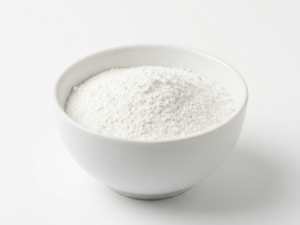
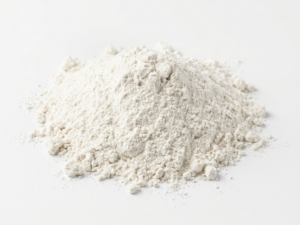
- Appearance: Colourless crystals or a white granular to fine crystalline powder, free flowing when kept dry.
- Colour: White, giving a clear, colourless solution at 96 to 98 percent minimum light transmittance.
- Taste: Strongly sour and clean, with no bitterness, and perceptible at low usage levels in finished products.
- Odour: Odourless, contributing acidity to the finished product without any aroma of its own.
- Particle Character: Coarse and fine granular grades span 8 to 100 mesh, while powder grades pass largely through a 75 μm screen.
- Solubility: Very soluble in water, dissolving rapidly to a clear solution suited to beverages and liquid systems.
- Ingredient Composition: Single component citric acid at 99.5 to 100.5 percent assay, with no additives, preservatives, or animal derived material declared.
- Hygroscopicity: The anhydrous form is slightly hygroscopic, so humidity above 70 percent or heat above 40°C causes caking, especially in fine grades.
- Thermal Behaviour: Melts at about 153°C and remains chemically stable for years in closed packaging under proper storage conditions.
- Dietary Suitability: Vegan and free of major allergens on documented grades, with Kosher and Halal status where certified.
Functionality
- Acidulation and pH Control: Three carboxyl groups release hydrogen ions in solution, lowering pH predictably for flavour balance and process control.
- Flavour Enhancement: A clean, sharp sourness lifts fruit flavours and balances sweetness without adding off notes of its own.
- Metal Chelation: Citrate binds iron, copper, and other metal ions, slowing metal catalysed oxidation of fats, colours, and flavours.
- Antioxidant Synergy: Paired with ascorbic acid or tocopherols, citric acid extends their protection by tying up the metals that drive oxidation.
- Gel Setting: Lowering pH allows high methoxyl pectin to set in jams and fillings, controlling gel strength and set time.
- Effervescence: Combined with sodium bicarbonate, it reacts on contact with water to release carbon dioxide in effervescent tablets and powders.
- Browning Control: Acidity and chelation slow enzymatic browning on cut fruit and vegetables, protecting colour during processing.
Benefits for Commercial Manufacturing
- Compendial Coverage: Grades meeting FCC, USP, and Ph. Eur. let food and supplement plants specify against the standard their QA programme follows.
- Mesh Grade Selection: Coarse, fine granular, and powder grades let buyers match dissolution speed and blending behaviour to the process.
- Low Trace Metal Limits: Lead at 0.5 mg/kg maximum and aluminium at 0.2 mg/kg maximum support approval for supplements and sensitive applications.
- Long Shelf Life: A 24 to 36 month shelf life unopened supports forward buying and steady drawdown without rotation pressure.
- Multi Origin Sourcing: Producers in China, Thailand, India, Turkey, and Belgium give buyers Asian and European supply options by grade.
- Flexible Pack Sizes: Bags from 25 kg and 50 lb up to 1,000 kg bulk bags fit both small batch kitchens and automated dosing lines.
- Documentation Ready: COA, specification, allergen, non GMO, Kosher, and Halal documents support QA review and supplier approval.