





Bulk Tricalcium Phosphate
$0.00
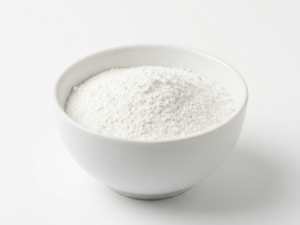
Produced to Food Chemicals Codex specification, food grade tricalcium phosphate, E341(iii), is a fine white powder delivering 34.0 to 40.0 percent calcium. Loss on ignition is held at 10.0 percent maximum, and select grades are milled so that 95 percent passes a 325 mesh screen.
In manufacturing it works as an anticaking and flow agent in powders and as a dense, neutral tasting calcium source for fortified foods and supplements. Lead, arsenic, and fluoride are each limited on the specification. Supply comes from phosphate producers in China and India, packed in lined 25 kg bags. Specifications and documentation are available on request.
Product Data
| Identity | Tricalcium phosphate, Ca3(PO4)2, E341(iii) |
|---|---|
| Assay | 34.0 to 40.0% as calcium |
| Loss on Ignition | 10.0% maximum at 800°C |
| Particle Size | 99.8% through 140 mesh; 95% through 325 mesh on select grades |
| pH | Near neutral in aqueous suspension; not a specified FCC parameter |
| Solubility | Practically insoluble in water; soluble in dilute hydrochloric and nitric acid |
| Relative Density | 3.18 |
| Fluoride | 75 mg/kg maximum |
| Lead | 2 mg/kg maximum |
| Arsenic | 3 mg/kg maximum |
| Food Grade Standard | FCC; GRAS under 21 CFR 182.1217 |
| Origin | China, India |
| Shelf Life | 24 months from production |
| Packaging | 25 kg paper bags or composite woven and paper bags with PE liner |
| Storage | Dry, ventilated warehouse, away from water, moisture, and sunlight |
Request More Information
Need a quote, more info, or a sample? Fill out the form below, and we’ll be happy to help.
Are you a vendor? Please contact us here.
Certifications & Compliance
- Core Documentation: Certificate of Analysis, specification sheet, origin documentation, and SDS issued per lot, with calcium assay and loss on ignition reported on the COA.
- FCC Conformance: Grades are documented against Food Chemicals Codex limits, including identification testing, assay, loss on ignition, and contaminant limits.
- Regulatory Status: Tricalcium phosphate is GRAS as calcium phosphate under 21 CFR 182.1217 and authorised in the EU as E341(iii).
- Fluoride Testing: Fluoride is limited to 75 mg/kg maximum, a key parameter because phosphates derived from phosphate rock can carry fluoride through processing.
- Lead and Arsenic Limits: Lead at 2 mg/kg maximum and arsenic at 3 mg/kg maximum are reported against specification for every grade on file.
- National Organic Program Status: Tribasic calcium phosphate appears on the National List as a permitted nonagricultural ingredient, though it is not itself certifiable organic.
- Kosher, Halal, and Allergen Statements: Kosher, Halal, and allergen declarations are confirmed per producing facility rather than assumed across supply.
Production & Sourcing
Food grade tricalcium phosphate is a manufactured mineral, made by reacting purified phosphoric acid with lime under controlled conditions. Its purity depends on how well the phosphoric acid was cleaned of fluoride and heavy metals, which is why those limits sit on the specification. Source86 sources from producers in China and India, with Chinese supply documented to FCC.
- Acid Purification: Phosphoric acid is purified to food grade, reducing fluoride, arsenic, and lead before it enters the reaction.
- Neutralisation: Purified acid reacts with a calcium hydroxide slurry under controlled pH, precipitating tricalcium phosphate as a fine solid.
- Filtration and Washing: The precipitate is filtered and washed to remove soluble residues and bring impurities within specification.
- Drying and Milling: Washed solids are dried to 10 percent maximum loss on ignition, then milled and sieved to 140 or 325 mesh.
- Testing, Packing, and Traceability: Each lot is tested for calcium, loss on ignition, and contaminants, packed in lined 25 kg bags, and lot coded.
Applications
Table salt, powdered sugar, and seasoning blends use tricalcium phosphate to stay free flowing in humid storage.
Dry beverage mixes, cocoa blends, and creamers rely on it to prevent caking and keep dosing consistent on filling lines.
For calcium fortified oat, almond, and soy drinks, the fine grade adds calcium with minimal impact on taste.
Calcium enriched cereals, flours, and baked goods carry tricalcium phosphate as a dense, neutral calcium source.
Supplement makers use it both as a calcium active and as a filler in compressed tablets and capsules.
In spray dried cheese, milk, and whey powders, it limits clumping and keeps powders flowing through storage and blending.
Physical & Functional Characteristics
- Appearance: A fine, free flowing white powder with no visible specks or foreign particles.
- Colour: Bright white, giving no tint to the powders and beverages it is added to.
- Taste and Odour: Odourless and bland, with only a faint chalky mouthfeel at high use levels.
- Particle Character: Fine grades pass 99.8 percent through 140 mesh, with select grades at 95 percent through 325 mesh.
- Solubility Behaviour: Practically insoluble in water but soluble in dilute acids, so it dissolves in the stomach rather than in the product.
- Density: A relative density of 3.18, making it heavy for its volume and prone to settling in liquids without a stabiliser.
- Ingredient Composition: Single component tricalcium phosphate, with no carriers or additives declared on the specifications on file.
- Moisture Profile: Loss on ignition of 10 percent maximum, with material held dry to protect its anticaking performance.
- Environmental Sensitivity: Water and humidity reduce its flow benefit, so bags must stay sealed and off the floor in ventilated storage.
- Dietary Suitability: A mineral ingredient suited to vegan formulations where the producer confirms synthesis from phosphoric acid and lime.
Functionality
- Anticaking and Flow: Fine particles coat host powders and absorb surface moisture, reducing bridging and clumping in hoppers, packs, and dispensers.
- Calcium Fortification: At 34 to 40 percent calcium, small additions reach fortification targets without significantly diluting the base formulation.
- Low Reactivity in Neutral Systems: Near insolubility at neutral pH limits free calcium in solution, reducing interaction with proteins compared with soluble calcium salts.
- Whitening and Opacity: The white, insoluble particles add opacity to powders and beverages, which can brighten appearance in plant based milks.
- Tablet Filling: A dense, stable powder that contributes bulk and calcium in compressed tablets, usually alongside binders and lubricants.
- Neutral Flavour Impact: Low solubility keeps it from contributing taste at typical levels, so it fits sweet and savoury systems alike.
Benefits for Commercial Manufacturing
- Two Functions, One Label Line: A single ingredient both keeps powders flowing and contributes calcium, simplifying fortified dry mix formulations.
- High Calcium Density: At 34 to 40 percent calcium, lower inclusion rates meet fortification claims than with lower calcium salts such as calcium citrate.
- Fine Mesh Options: Grades at 140 and 325 mesh let formulators choose finer material for beverages and coarser material for salt and seasonings.
- FCC and GRAS Documentation: FCC conformance and GRAS status give QA and regulatory teams a clear basis for approving the ingredient.
- Multiple Producers: Seven producers in China and one in India give buyers several sourcing options for the same food grade.
- Stable Mineral Supply: A 24 month shelf life and an inert mineral form support forward buying with little risk of degradation.
- Documentation Ready: COA, specification, SDS, and origin documents support supplier approval and audit review.