





Bulk Creatine Monohydrate
$0.00
Source86’s creatine monohydrate is a synthesised, food and supplement grade powder supplied in standard 80 mesh and micronized 200 mesh grades. Specifications hold assay at 99.5 percent minimum by HPLC, with creatinine at 100 mg/kg maximum and dicyandiamide at 50 mg/kg maximum.
Sports nutrition brands, supplement manufacturers, and contract blenders use it in powders, capsules, tablets, and gummies. Because it is produced by chemical synthesis rather than from animal tissue, it suits vegan formulations, and quality is judged on its impurity profile rather than on crop or origin. It is a conventional ingredient, since a synthesised compound is not eligible for organic certification. Samples are available for formulation trials.
Product Data
| Identity | Creatine monohydrate, C4H9N3O2·H2O |
|---|---|
| Grades | Standard 80 mesh; micronized 200 mesh |
| Assay | 99.5% minimum by HPLC |
| Loss on Drying | 12.0% maximum, reflecting the bound water of hydration |
| Creatinine | 100 mg/kg maximum |
| Dicyandiamide | 50 mg/kg maximum |
| Dihydrotriazine | Not detected |
| Sulphated Ash | 0.1% maximum |
| pH | About 7 in saturated aqueous solution |
| Solubility | About 14 g per litre of water at 20°C |
| Heavy Metals | 10 ppm maximum; lead and arsenic 1 ppm maximum each |
| Microbiological Limits | Total plate count 1,000 cfu/g maximum; yeast and mould 100 cfu/g maximum; E. coli and Salmonella negative |
| Shelf Life | 24 to 36 months in sealed original packaging |
| Packaging | 25 kg fibre drums or cartons with double polyethylene liners |
| Storage | Cool and dry, below 25°C, sealed and protected from moisture |
Request More Information
Need a quote, more info, or a sample? Fill out the form below, and we’ll be happy to help.
Are you a vendor? Please contact us here.
Certifications & Compliance
- Core Documentation: Certificate of Analysis, specification sheet, origin documentation, and SDS issued per lot, with assay and loss on drying reported on the COA.
- Impurity Testing: Creatinine, dicyandiamide, and dihydrotriazine are quantified by HPLC per lot, since these synthesis byproducts are what separate one creatine supply from another.
- Contaminant and Microbiological Testing: Heavy metals, lead, arsenic, and microbiological limits are reported against specification, supporting supplement facility and food safety audits.
- Kosher, Halal, and Vegan: Kosher and Halal documentation is confirmed per producing facility, and the synthesised material contains no animal derived inputs.
- Allergen Statements: Supplier declarations cover the major allergens, with cross contact status confirmed per packing facility rather than assumed across supply.
- Organic Status: As a synthesised compound, creatine monohydrate is not certifiable organic, and organic programmes should confirm its use with their certifier.
Production & Sourcing
Creatine monohydrate is made by chemical synthesis, not extracted from meat or fish. Commercial production reacts sodium sarcosinate with cyanamide, then purifies and crystallises the product, which is why its specification centres on reaction byproducts rather than agricultural variables. Source86 supplies grades specified against these impurity limits, with documentation issued per lot.
- Synthesis: Sodium sarcosinate and cyanamide react in water under controlled temperature and pH, forming creatine in solution.
- Crystallisation: Creatine crystallises from the reaction liquor as the monohydrate, carrying one bound water molecule for each creatine molecule.
- Purification and Washing: Crystals are separated, washed, and recrystallised where needed to bring creatinine, dicyandiamide, and dihydrotriazine within specification.
- Drying and Milling: Crystal is dried gently enough to keep its water of hydration, then milled and sieved to 80 or 200 mesh.
- Testing, Packing, and Traceability: Each lot is tested by HPLC for assay and impurities, packed in lined drums or cartons, and lot coded for traceability.
Applications
Unflavoured creatine, pre workout blends, and post workout recovery mixes carry creatine monohydrate as a core active.
Supplement manufacturers encapsulate or compress creatine monohydrate, with micronized grades filling capsules more densely and evenly.
Creatine gummies and soft chews are a growing format, where formulation pH and moisture determine how much creatine survives shelf life.
For on the go formats, creatine is packed dry in stick packs and sachets that the consumer mixes into water or shakes.
Protein blends, mass gainers, and meal replacement powders add creatine as a secondary active alongside whey or plant protein.
Contract blenders and private label brands specify creatine monohydrate by mesh and impurity limits across the formats above.
Physical & Functional Characteristics
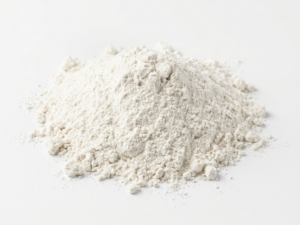
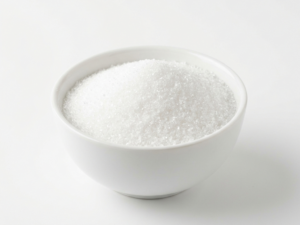
- Appearance: A white, free flowing crystalline powder, finer and softer to the touch in the micronized grade.
- Colour: Pure white, with any yellowing or greying pointing to contamination or degradation during storage.
- Taste: Essentially tasteless to faintly bitter, with a slightly gritty mouthfeel in the 80 mesh grade when undissolved.
- Odour: Odourless, so it contributes no aroma to flavoured powders or capsules.
- Particle Character: Standard grade passes 80 mesh, while micronized grade passes 200 mesh for smoother texture and faster dispersion.
- Water of Hydration: Each molecule carries one bound water, about 12 percent by weight, so creatine monohydrate supplies roughly 88 percent creatine.
- Ingredient Composition: Single component creatine monohydrate with no carriers, flow agents, or additives in the standard grade.
- Hygroscopicity: Low hygroscopicity compared with creatine salts, though prolonged exposure to humid air still causes clumping.
- Thermal Behaviour: Loses its bound water when heated above roughly 100°C and decomposes rather than melting at higher temperatures.
- Dietary Suitability: Vegan, free of animal derived inputs, and naturally free of gluten and major allergens.
Functionality
- Dispersion Rather Than Dissolution: Low water solubility means creatine disperses as fine particles in cold drinks, so micronized grades suspend longer and feel less gritty.
- Acid and Heat Instability: In solution, creatine cyclises to creatinine, faster at low pH and higher temperature, so liquid and acidic formats lose potency over time.
- Dry Blend Stability: Kept dry, creatine monohydrate is stable for years, which is why powders, capsules, and tablets are the dominant delivery formats.
- Flavour Neutrality: A near neutral taste lets creatine enter flavoured systems at gram level doses without masking agents in most formulations.
- Flow and Fill Behaviour: The 80 mesh grade flows freely for auger filling and blending, while micronized powder needs flow aids or granulation on high speed lines.
- Compression Behaviour: Creatine compresses poorly on its own, so tablet formulations typically add binders and lubricants to reach target hardness.
Benefits for Commercial Manufacturing
- Impurity Driven Qualification: Per lot HPLC limits on creatinine, dicyandiamide, and dihydrotriazine give QA teams a measurable basis for approving supply.
- Two Mesh Grades: Standard 80 mesh suits capsules and blends, while micronized 200 mesh suits drink mixes where mouthfeel and suspension matter.
- Long Shelf Life: A 24 to 36 month shelf life in sealed packaging supports forward buying and steady drawdown across production runs.
- Vegan Positioning: Synthesised creatine carries no animal derived inputs, supporting vegan and plant based supplement claims without a separate grade.
- Single Ingredient Label: Unblended creatine monohydrate declares as one ingredient, simplifying labels on unflavoured and private label products.
- Documentation Ready: COA, specification, SDS, allergen, and origin documents support supplement facility audits and supplier approval.