AUSTIN, Texas (August 12, 2026). The U.S. Food and Drug Administration (FDA) announced that Whole Foods Market is recalling some foods made with jalapeños because they may contain Salmonella. The recall includes guacamole, salsa, pico de gallo, dips, and other prepared foods sold online and in stores across 12 states. The company has not reported any illnesses linked to the recalled products.
Whole Foods Market recall: quick summary
Whole Foods Market recalled select items from its Produce and Prepared Foods departments made with jalapeños supplied by Coast Citrus Distributors. The supplier recalled its fresh jalapeños as part of an ongoing multistate Salmonella outbreak investigation.
The affected Whole Foods Market products carry Best Before or Best By dates ranging from August 7 through August 16, 2026, depending on the item. Customers should not consume products that match the recall details. They can discard the affected food or return it to a Whole Foods Market store with a valid receipt for a full refund.
Official recall details
✦
Recall announcement date: August 12, 2026
✦
FDA publication date: August 12, 2026
✦
Announced by: U.S. Food and Drug Administration (FDA)
✦
Company: Whole Foods Market
✦
Brand: Whole Foods Market
✦
Products: Select salsas, guacamole, pico de gallo, dips, and prepared foods containing jalapeños
✦
Issue: Possible Salmonella contamination
✦
Affected dates: Best Before or Best By dates from August 7 through August 16, 2026, depending on the product
✦
Distribution: Texas, Oklahoma, Louisiana, Arkansas, Wisconsin, Michigan, Illinois, Indiana, Iowa, Missouri, Kentucky, and Ohio
✦
Consumer action: Do not consume affected products. Discard them or bring a valid receipt to a Whole Foods Market store for a full refund.
✦
Want to know more about what happened? Keep reading.
What happened?
Whole Foods Market announced the recall on August 12 after Coast Citrus Distributors recalled fresh jalapeños associated with an ongoing Salmonella outbreak investigation.
Meanwhile, the FDA and the Centers for Disease Control and Prevention (CDC) are investigating the multistate outbreak. As part of that investigation, regulators identified a grower in Sinaloa, Mexico, that supplies Coast Citrus Distributors as the likely source.
In response, Whole Foods Market removed selected foods containing the implicated peppers from its Produce and Prepared Foods departments. These products include guacamole, salsa, pico de gallo, dips, and other prepared foods sold online and at stores across the 12 listed states.
Specifically, the recall covers products with Best Before or Best By dates between August 7 and August 16, 2026. Customers should use the product names, PLU codes, and date ranges below to determine whether an item falls within the recall.
Affected products
Product | PLU codes | Best Before or Best By dates | Affected states |
|---|---|---|---|
Mild Guacamole Dip | 21211600000, 21501700000, 25705700000, 25926000000, 25054100000 | 8/7/2026 to 8/12/2026 | TX, OK, LA, AR, WI, MI, IL, IN, IA, MO, KY, OH |
Mild Guacamole Dip No Tomatoes | 24293900000, 25745000000, 24367500000, 25658600000 | 8/7/2026 to 8/12/2026 | TX, OK, LA, AR, WI, MI, IL, IN, IA, MO, KY, OH |
Spicy Guacamole Dip No Tomatoes | 25745200000, 28432400000, 23501500000, 25744900000 | 8/7/2026 to 8/12/2026 | TX, OK, LA, AR, WI, MI, IL, IN, IA, MO, KY, OH |
Medium Pico de Gallo Guacamole Dip | 29802800000 | 8/7/2026 to 8/12/2026 | TX, OK, LA, AR, WI, MI, IL, IN, IA, MO, KY, OH |
Pomegranate Guacamole Dip | 27908100000, 27908500000 | 8/7/2026 to 8/12/2026 | TX, OK, LA, AR, WI, MI, IL, IN, IA, MO, KY, OH |
Roasted Corn Guacamole Dip | 27132500000, 24075300000, 29956000000, 29533500000 | 8/7/2026 to 8/12/2026 | TX, OK, LA, AR, WI, MI, IL, IN, IA, MO, KY, OH |
Spicy Guacamole Dip | 21212000000, 21211900000, 25138200000 | 8/7/2026 to 8/12/2026 | TX, OK, LA, AR, WI, MI, IL, IN, IA, MO, KY, OH |
Dip Trio | 25926000000, 85001178876, 26383300000 | 8/7/2026 to 8/12/2026 | TX, OK, LA, AR, WI, MI, IL, IN, IA, MO, KY, OH |
Salsa, Heirloom Tomato | 22860200000, 24091700000, 25024800000, 46000049560, 29648100000, 29648700000, 24118800000 | 8/9/2026 to 8/14/2026 | TX, OK, LA, AR, WI, MI, IL, IN, IA, MO, KY, OH |
Mango Pineapple Salsa | 21195900000, 46000040275, 27578600000, 25867600000 | 8/9/2026 to 8/14/2026 | TX, OK, LA, AR, WI, MI, IL, IN, IA, MO, KY, OH |
What caused the issue?
The recall involves fresh jalapeños supplied by Coast Citrus Distributors that may be contaminated with Salmonella. The FDA traced the peppers to a grower in Sinaloa, Mexico, which it identified as the likely source. Coast Citrus Distributors recalled the remaining affected peppers and stopped importing from the grower. As a result, other businesses that used the peppers reviewed their products.
Contaminated food can cause illness even when it looks and smells normal. Salmonella can cause diarrhea, fever, and stomach cramps, sometimes with nausea or vomiting. Young children, older adults, and people with weakened immune systems are at greater risk of severe illness.
So far, the wider outbreak has caused 345 illnesses and 36 hospitalizations across 27 states. No deaths have been reported. These figures cover the full outbreak and do not mean that any of these cases have been linked to the recalled Whole Foods Market products.
Food safety insight
“When one fresh ingredient is used across multiple ready to eat recipes, a supplier level food safety concern can quickly affect many finished products,” said Krizella Pascua, Food Safety Specialist at Source86.
“Strong ingredient traceability allows FSQA teams to identify which recipes, production lots, and locations received the affected ingredient. That visibility can help companies remove impacted products faster while limiting unnecessary disruption to unaffected inventory.”
Here’s what you should do
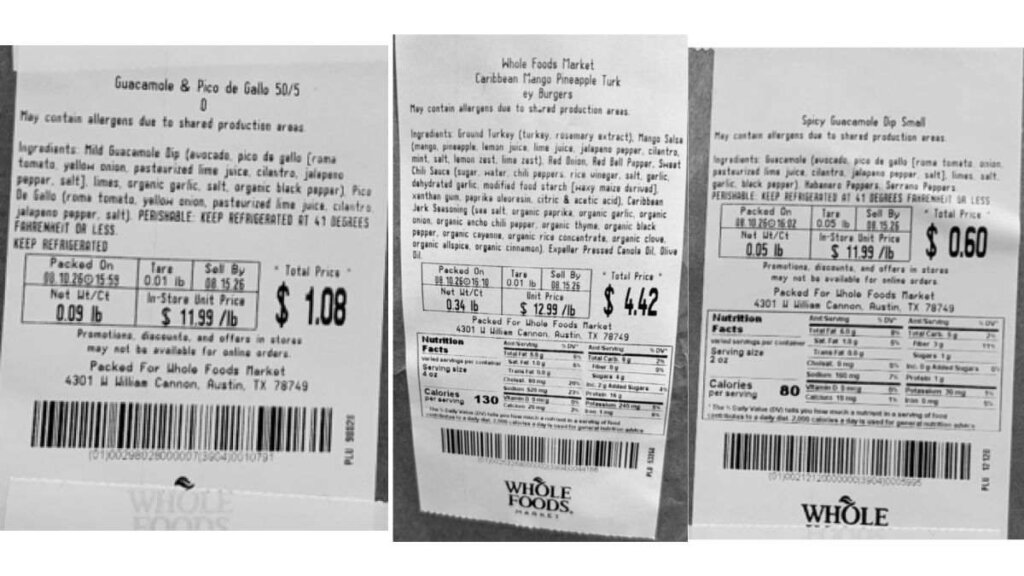
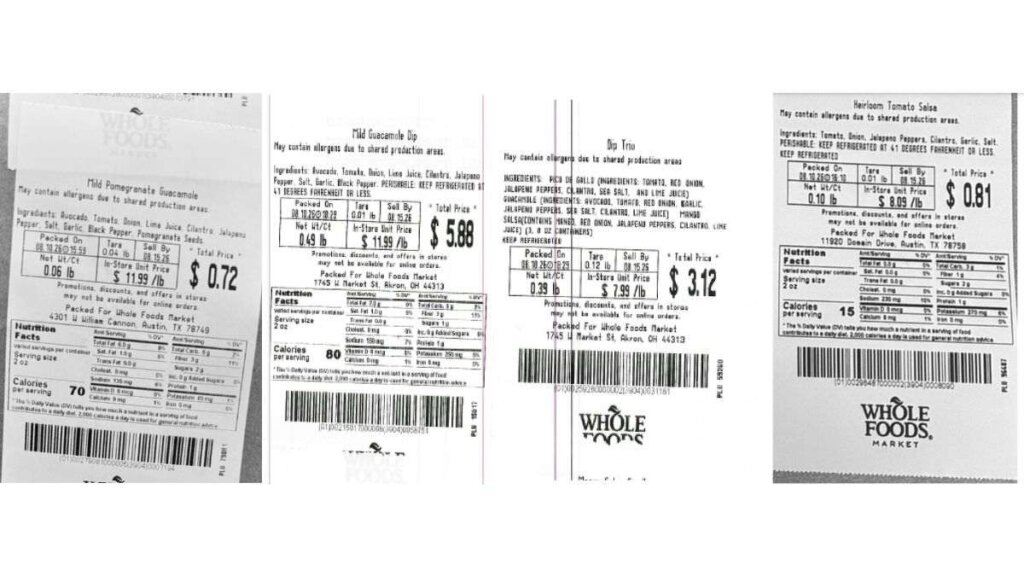
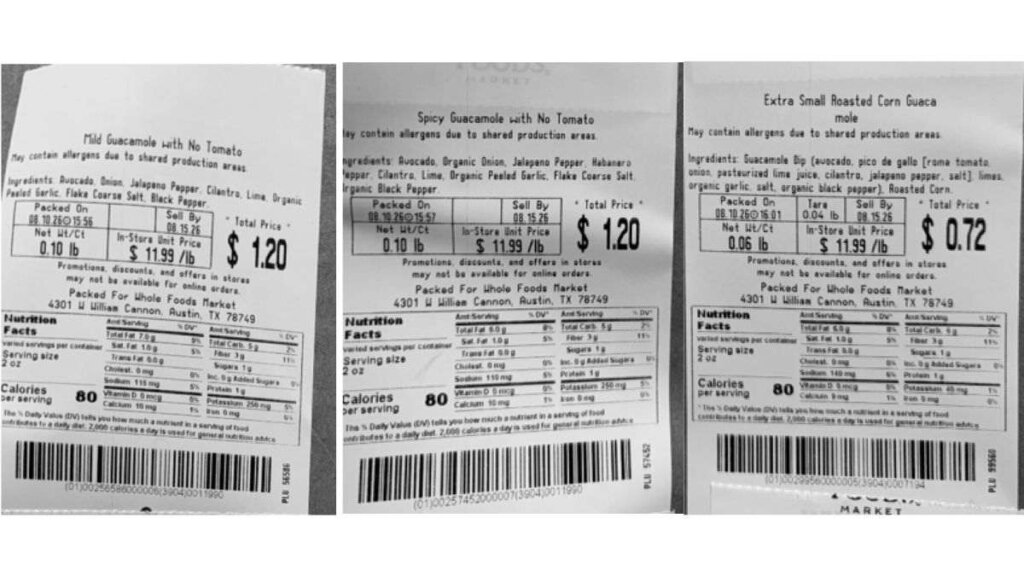
Consumers with products included in the Whole Foods Market recall should:
- Do not consume products matching the recalled product name, PLU code, and date information.
- Check packaging or labels for the product name, PLU code, and Best Before or Best By date.
- Pay particular attention to guacamole, salsa, pico de gallo, dips, and prepared foods containing fresh jalapeños.
- Discard affected products or bring a valid receipt to any Whole Foods Market store for a full refund.
- Do not use appearance, smell, or taste to determine whether a recalled product is safe.
- Clean and sanitize surfaces or containers that may have contacted recalled food.
- Contact a healthcare provider if you develop symptoms of Salmonella infection after consuming an affected product.
Consumer contact
- Phone: 1 844 936 8255
- Monday through Friday: 7:00 a.m. to 10:00 p.m. CST
- Saturday and Sunday: 8:00 a.m. to 6:00 p.m.
- Refunds: Available at Whole Foods Market stores with a valid receipt
Behind the brand
Whole Foods Market opened its first store in Austin, Texas, in 1980, with 19 employees. The retailer now operates more than 550 stores across the United States, Canada, and the United Kingdom.
Amazon acquired Whole Foods Market in 2017. The company sells groceries through physical stores and online channels, including products from its Produce and Prepared Foods departments.
This recall affects selected prepared foods rather than every product sold under the Whole Foods Market brand. Customers should rely on the listed product identifiers and date ranges when checking their purchases.
Other relevant recalls
- Taylor Fresh Foods Recalls Jalapeño Products Over Possible Salmonella Contamination
- Food To Live Recalls Green Powder Products Over Possible Salmonella Contamination
- Bettergoods Pistachio Nut Butter Recall Over Possible Salmonella Contamination
Regulatory context
The Whole Foods Market recall illustrates how a supplier-level investigation can affect retailers that use the same ingredient in different recipes. Because the implicated jalapeños were incorporated into multiple ready-to-eat products, the potential impact extended beyond the original produce supply.
For food businesses, this highlights the importance of ingredient-level records, which can help connect a supplier notification to specific recipes, production dates, and retail locations. Those records also help teams distinguish affected inventory from products made with other ingredients or lots.
Ensuring safe eats
Ultimately, the Whole Foods Market recall demonstrates how one ingredient can connect an upstream food safety problem to numerous ready-to-eat products. Therefore, strong supplier verification, ingredient traceability, sanitation controls, and recall procedures can help companies respond quickly when these situations occur.
Meanwhile, consumers should check their Whole Foods Market products against the recall information and avoid consuming affected items. If identified, recalled products should be discarded or returned with a valid receipt for a full refund.
This recall followed the jalapeño outbreak into prepared foods, and Source86 helps retailers trace which in-store recipes use a recalled produce item.
Running prepared foods or deli programs? Talk to us about ingredient-to-recipe traceability.